How to Start a Conversation Without Feeling Awkward
Here’s how to start a conversation with almost anyone: comment on something you’re both looking at, ask one easy question about it, then follow whatever detail they hand back.
Your train has been stuck between stations for ten minutes. The conductor just announced another delay. The person next to you sighs loudly.
Free · No sign-up · About a minute
Practice real conversations until you communicate better
Communicate Better is where you practice real conversations. Step into the moment, say it your way, and see how they react — then get coached on a better line.
- Type what you’d say
- See where they’re coming from
- See how it lands — and a better line
4 ways to start a conversation
The first line is the hardest part, and it matters less than you think. Once you know how to start a conversation with something you both share, the rest mostly follows.
How to start a conversation with a stranger: use what you share
Most people freeze because they think they need a clever opening line. You don’t. The simplest answer to how to start a conversation with a stranger is to comment on the thing you’re both already in — the long line, the delayed train, the dog pulling toward you, the snack table at a party where you only know the host. A shared moment gives you a reason to talk that doesn’t feel like a pitch, and it gives them something easy to answer. Keep the first line light and a little bit true: “Is this line always this long, or did I pick a bad day?” Then add one easy question. If they answer with a smile and a full sentence, you’re in. If they give a polite one-word reply, that’s fine too — you tried, and nobody is keeping score. Before you approach someone, check the signals: loose shoulders, eyes wandering the room, no headphones. That’s an open door.
How to keep a conversation going: follow the detail they give you
Knowing how to start a conversation only covers the first ten seconds. What keeps it going is noticing the small detail people drop almost every time they answer — “my third coffee,” “I just moved here,” “my first time at one of these.” Those aren’t filler. They’re the other person handing you the next topic. Small talk goes flat when you skip the detail and jump to your next prepared question, and the chat starts to feel like an interview. Pick up the thread instead: “Wait, you just moved here? From where?” Then trade something back about yourself, so it’s a conversation and not a questionnaire. That rhythm — ask, listen for the detail, follow it, share a bit — is how small talk turns into a real talk, and it’s how you get to know someone without running down a list of questions. When you do run dry, go back to the setting you’re both in; it’s always there.
How to start a conversation when you’re shy: make it easy
If you’re shy or introverted, the pressure usually comes from treating every chat like a performance. Take the pressure off both of you. Start with something low-stakes you can say in one breath, let a little quiet be okay, and don’t wait until you feel confident — the confidence shows up after you start a conversation, not before. You don’t need to be the funniest person in the room. People remember whoever made it easy to talk. Being approachable is the other half of how to start a conversation. Take one earbud out, look up from your phone, and when someone talks to you, answer with more than a word: “Ha, you’re always allowed to say hi — where are you headed?” If big groups drain you, pick places built around an activity — a class, a volunteer shift, a trivia team — where the thing you’re doing carries the talk. That’s how a lot of introverts make friends: side by side, one repeat meeting at a time.
How to start a conversation that turns into a friendship: name a day
Plenty of adults know how to start a conversation and still struggle to make friends as an adult, because every nice chat ends with “we should hang out sometime” — and sometime never comes. Adult friendships don’t just happen. They’re built from repeat meetings and one person willing to suggest the next one. That can be you. It feels forward, but most people are quietly relieved when someone else makes the plan. When the chat goes well, turn the vague line into a real one: “Yes — let’s actually do it. Are you free Thursday? I’ll text you a place.” Keep the ask small and easy to decline: a coffee, a walk, the same class next week. If you just moved and don’t know anyone yet, say so; it gives people a reason to include you. Then show up again. The second and third conversations are where acquaintances turn into friends.
How to start a conversation without these common mistakes
- Waiting for the perfect line. By the time you think of it, they’ve walked away — “Is this seat taken?” works fine.
- Opening by putting yourself down. “Sorry, I’m terrible at this” makes them reassure you instead of talk to you.
- Asking a yes-or-no question and stopping. “Busy day?” needs a follow-up, or it ends at “yeah.”
- Starting when they clearly can’t talk. Headphones in and eyes on a laptop usually means not now.
How to start a conversation: what to say (examples)
Here’s how to start a conversation in the places it comes up most. Every opener uses something right in front of you, so no clever lines needed.
| The moment | Say this | Avoid this |
|---|---|---|
| At a party where you only know the host | “Hi, I’m Jess. How do you know Dan?” | Standing near a group and hoping they invite you in |
| At the gym, someone’s on the machine you want | “Hey, how many sets do you have left? Mind if I work in?” | Hovering behind them without saying anything |
| At the dog park | “Your dog is adorable. What’s their name? How old?” | Only talking to the dog |
| Your first day at a new job | “Hi, I’m new on the marketing team. Any tips for surviving the first week?” | Eating lunch at your desk so you don’t have to talk to anyone |
| Seated next to a stranger at a wedding | “Are you here for the bride or the groom? How do you know them?” | Scrolling your phone until the toasts start |
| Someone’s wearing your favorite band’s shirt | “Okay, great shirt. Did you catch them on this tour?” | Noticing and saying nothing |
| At a networking event | “Hi, I’m Sam. What brought you out tonight?” | Leading with your elevator pitch |
| A neighbor you’ve only ever waved at | “Hey, I’m Alex from 4B — I feel like we’ve been waving for a year. How long have you lived here?” | Another silent wave in the hallway |
How to start a conversation: FAQ
What is a good way to start a conversation?
Comment on something you’re both experiencing, then ask an easy question about it: “This line is wild — have you been here before?” It works because it’s about the shared moment, not about either of you, so there’s no pressure to be impressive.
How do you start a conversation with someone new?
Say hi, add one line about the setting, and give your name early: “Hi, I’m Sam — I only know the host. How do you know her?” Asking how someone is connected to the event is an easy way to start a conversation with someone new, because everyone has an answer.
How do I start a conversation over text?
Knowing how to start a conversation over text comes down to one rule: skip a lone “hey.” It makes the other person do all the work. Open with something specific: a callback to what you talked about, a photo of something they’d like, or a quick question they can answer in one line. “Did you ever try that ramen place?” is easier to answer than “what’s up.”
How do you keep a conversation going when it dies?
Go back to the last detail they mentioned — “You said you just got back from a trip. Where’d you go?” — or to the setting you’re in. If it still stalls, end it warmly. Part of knowing how to start a conversation is knowing when to let one go — a short, friendly chat still counts.
What should you not say when you start a conversation?
When you’re learning how to start a conversation, skip complaints about people nearby, personal questions like age or salary, and anything that needs a long answer. A compliment on something they chose — a jacket, a book, their dog — lands better than a comment on their body.
Can I practice how to start a conversation for free?
Yes. The scene at the top of this page is free with no sign-up, and a free account unlocks the first moments in every category. All-access opens every moment, every scene and every skill, with unlimited practice.
Knowing how to start a conversation isn’t a script. It’s a reflex you build by practicing.
Communicate Better is built for one thing: helping you communicate better. Step into real moments, say it your way, and see how it lands — until the right words come without thinking.
Learn more about Communicate Better →Type what you’d say
Step into a real moment and reply in your own words, the way you’d actually say it. No multiple choice, no script.
See where they’re coming from
Then call what’s going on for them, what they mean and how they feel, and find out right away whether you read them right.
See how it lands — and a better line
An AI plays the other person and reacts to what you actually wrote. Then a coach shows you a better line and why it works. The moments you miss come back until you’ve got them.
7 scenes and 4 core skills — practice them all
1,100+ real moments to practice, from your first hello to the hardest talk.
 New People
Openers, small talk, reading if they want to keep going, making new friends.
How to start a conversation → Dating
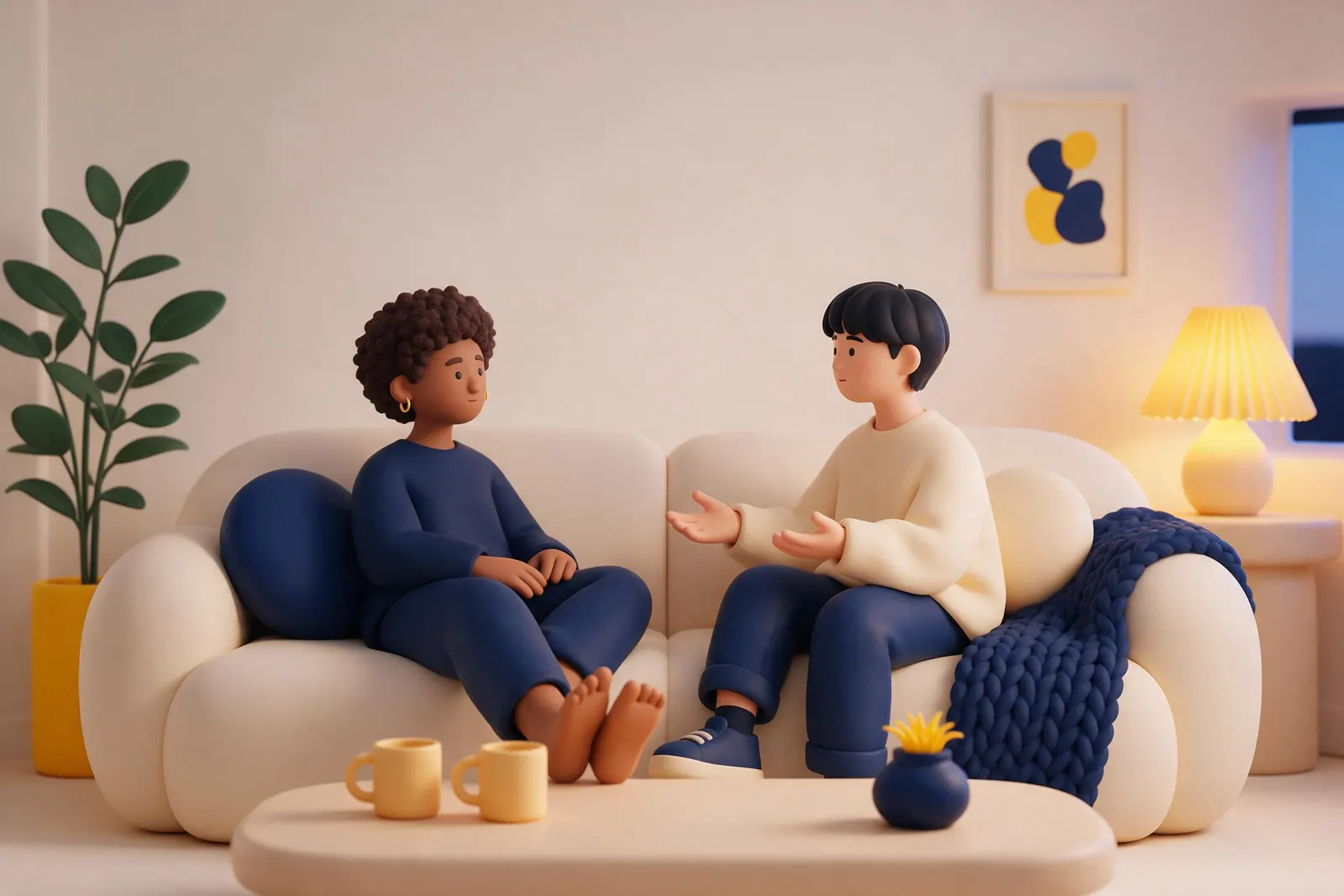 Relationships
Needs, comfort, fights, a partner who’s gone quiet, apologies, big decisions.
How to communicate better with your partner → Friends
 Work & Career
Meetings, feedback, being overlooked, asking for a raise, networking.
Communication in the workplace → Messages & Online
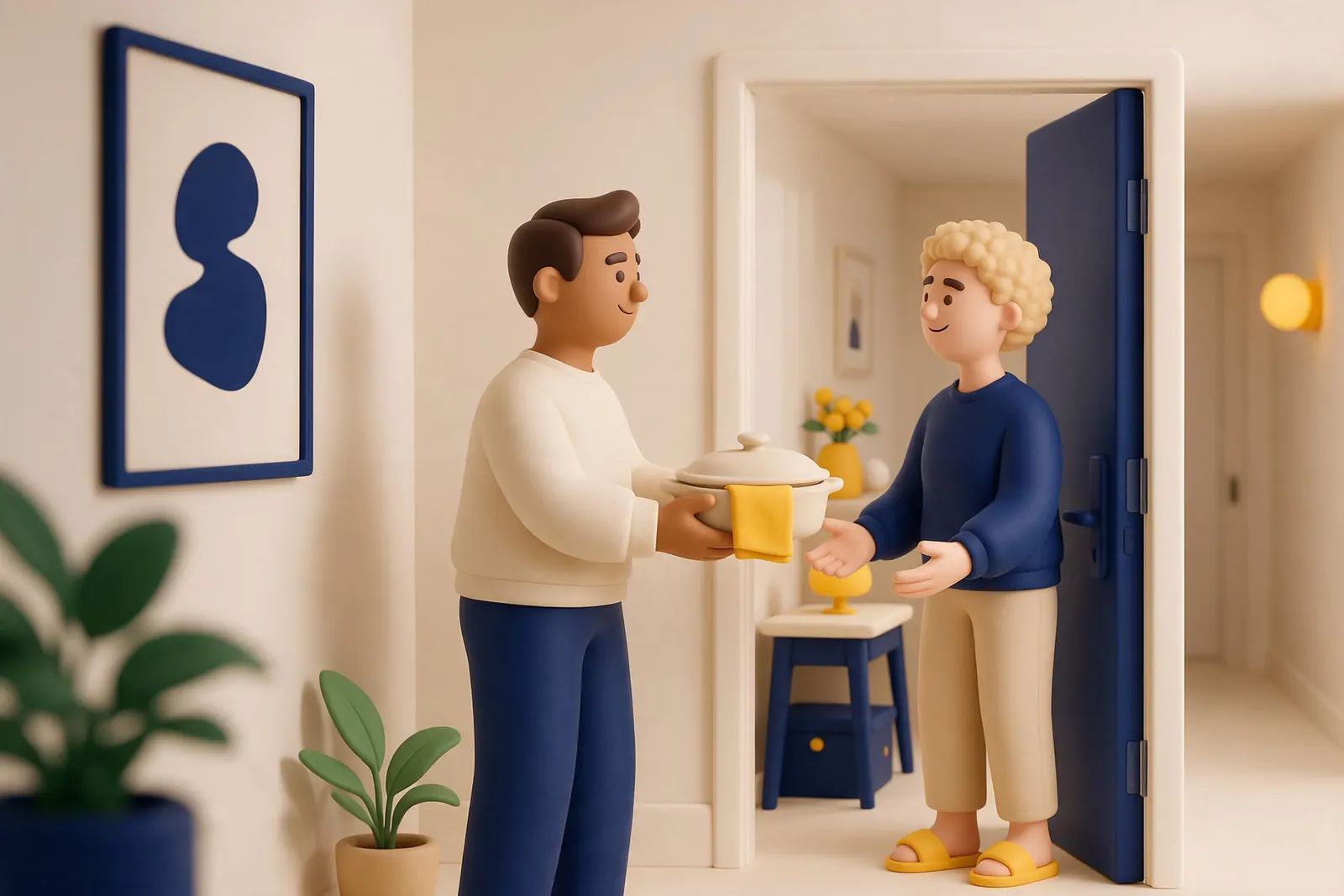 Everyday Life
New moments added all the time — and you can send in one of your own.
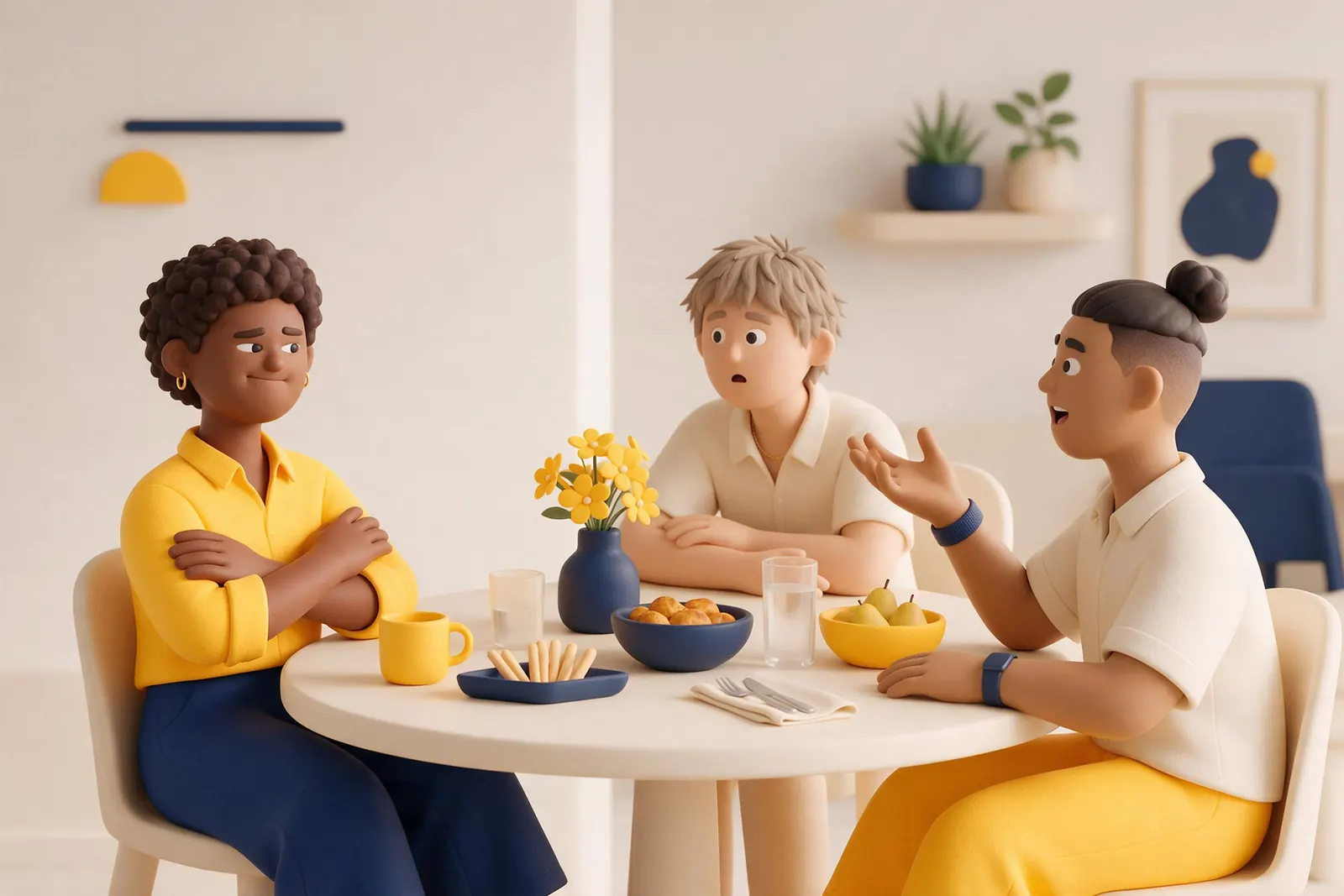 Reading People
 Conversation Skills
 Speaking Up
 Social Confidence
Free to start. Worth keeping.
- ✓ The first 3 moments in every scene and skill
- ✓ 5 AI coach replies a day
- ✓ Everything in Warm-up, plus:
- ✓ Every moment in all 11 scenes and skills
- ✓ Every new moment we add
- ✓ AI coach on every round — up to 100 a day
- ✓ Everything in Warm-up, plus:
- ✓ Every moment in all 11 scenes and skills
- ✓ Every new moment we add
- ✓ AI coach on every round — up to 100 a day
- ✓ Save ~50% — about $90 a year vs monthly

The best way to communicate better.
Practice the exact moment. Free to start, no card needed.