What Is Emotional Intelligence in a Relationship? Real Examples
Here’s what emotional intelligence looks like in a relationship, with real examples of small moments handled well.
Noticing what you and your partner feel, putting it into words instead of acting it out, and responding to what they need rather than what you would need.
- “I’m snapping because I’m stressed about work, not because of you.”
- “You seem quiet tonight. Want to talk, or just hang out?”
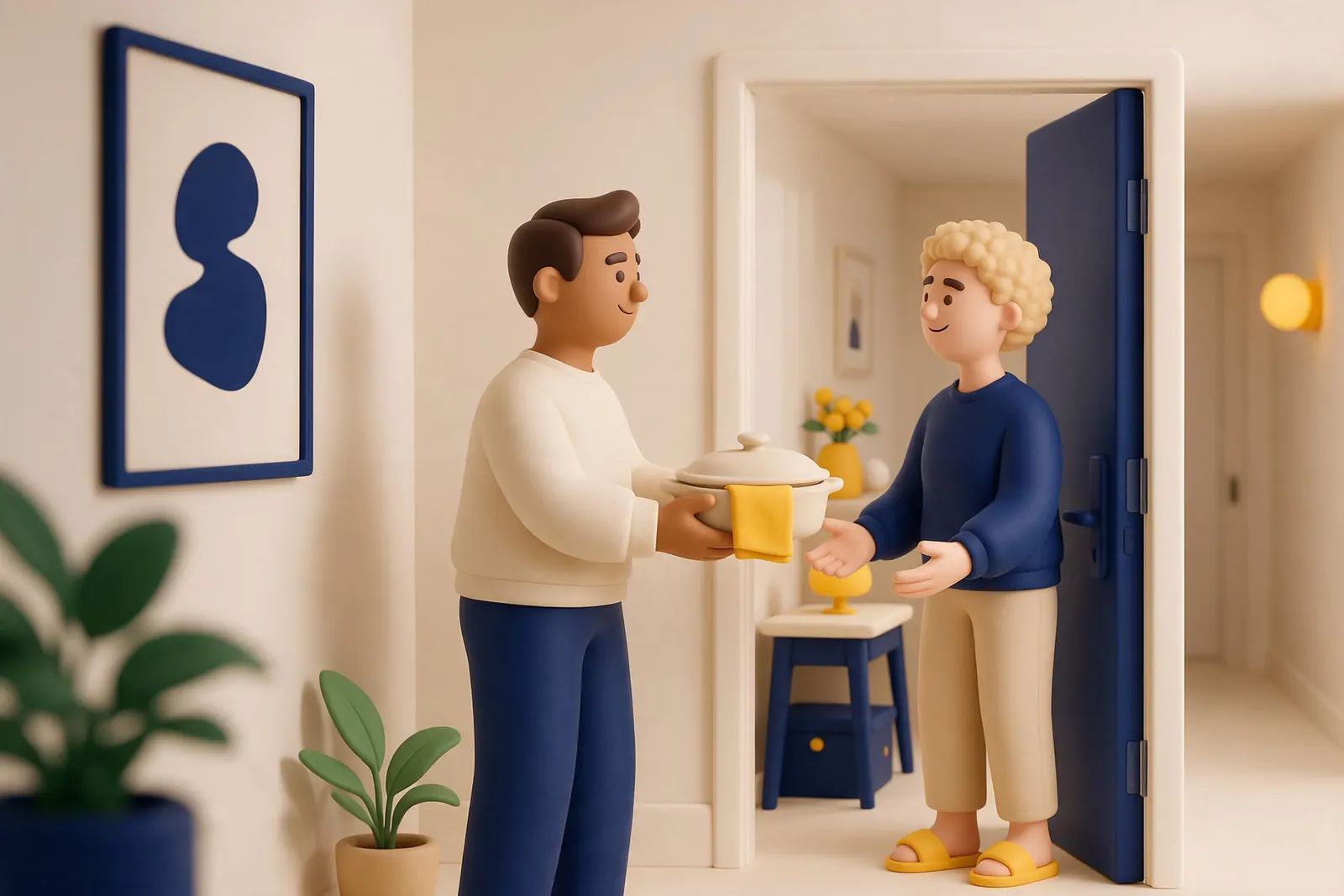
Luca just got off the phone: he didn't get into the electricians' union apprenticeship he's applied to twice. Your instinct is to hug him, order his favorite takeout, and talk the whole thing through.
Free · No sign-up · About a minute
Practice real conversations until you communicate better
Communicate Better is where you practice real conversations. Step into the moment, say it your way, and see how they react — then get coached on a better line.
- Type what you’d say
- See where they’re coming from
- See how it lands — and a better line
What is emotional intelligence in a relationship? 4 skills
Emotional intelligence in a relationship isn’t being calm all the time. It’s a handful of skills you use in ordinary moments, like these four.
Notice your own feeling before it drives
Anger is often fear, and avoidance is often old stress. Pausing to ask “what am I actually feeling?” turns “Where were you?!” into “I was scared.” Knowing your own patterns, like why you dodge money talks, is where emotional intelligence in a relationship starts.
Read what your partner needs, not what you would
You might want a hug and a long talk after bad news. They might want a quiet night. Emotional intelligence means asking or noticing, then honoring it, even when their way isn’t yours.
Name feelings out loud
Being emotionally available means letting your partner in on what’s happening inside you, which is most of how to communicate better with your partner. “I’ve been down since the project news” is a small sentence that prevents “three weeks and I didn’t even know you were upset.”
Pause when a talk gets flooded
When one of you says “I can’t think straight,” pushing for one more round rarely works. Agree to a break with a time to come back; it’s a key part of how to resolve conflict in a relationship. Respecting a pause is emotional intelligence in action, and it saves the conversation.
Signs of low emotional intelligence in relationships
- Explaining your partner’s feelings to them instead of asking.
- Keeping big news to yourself, then being surprised they feel shut out.
- Pushing to finish an argument when they’ve asked to stop.
- Snapping in anger when the real feeling was fear or hurt.
Emotional intelligence in a relationship: examples
What is emotional intelligence in a relationship in real life? Here’s how it sounds in the moments that test it most.
| The moment | Say this | Avoid this |
|---|---|---|
| They ask to stop mid-argument | “Okay. Let’s take an hour. I’m not going anywhere.” | “We’re so close, just hear me out.” |
| They’re quietly jealous of a text from your ex | “It was just a birthday text. I get why it’s weird though. Want to see it?” | “Seriously? It’s nothing, relax.” |
| They come home clearly off | “You seem heavy tonight. Want to talk, or want distraction?” | “What’s your problem?” |
| You overreacted earlier | “I snapped at you before. It wasn’t about you, I was stressed. Sorry.” | Acting like it didn’t happen |
| They share a win | “That’s huge! Tell me everything. How did it feel?” | “Nice. Anyway, my day was awful.” |
| You need something and haven’t said it | “I’ve been feeling a little disconnected. Could we have a night just us this week?” | Sulking until they guess |
How to be emotionally available in a relationship
Emotional availability is the willingness to let your partner see what you feel and to stay present when they show you what they feel. If you tend to go quiet, start small: tell them one real thing about your day, not just the logistics. When they share something hard, stay with it instead of fixing it or changing the subject. It feels exposed at first. Over time, it’s what makes a partner feel close to you rather than just near you.
What is emotional intelligence in a relationship: FAQ
What is emotional intelligence in a relationship?
It’s the ability to notice and name your own feelings, read your partner’s, and respond in a way that fits what they need. It shows up in small moments: how you react to bad news, how you argue, and whether you share what’s going on inside.
What are signs of an emotionally intelligent partner?
They can say “I’m upset because…” instead of lashing out, they ask what you need instead of assuming, they apologize specifically, and they can take a break in a fight without disappearing.
Can you improve emotional intelligence in a relationship?
Yes. It’s a set of habits, not a fixed trait. Practice naming your feelings, asking before you fix, and pausing before you react. Rehearsing real moments helps the new response show up when it counts.
What does being emotionally available mean?
It means letting your partner know what you feel and being present when they share their feelings. Someone who is emotionally unavailable keeps things surface-level, changes the subject, or goes quiet when things get real.
Why does emotional intelligence matter in relationships?
Because most conflict between partners is about feelings that weren’t said: hurt, fear, loneliness. When both people can name those, arguments get shorter and repairs get easier.
Emotional intelligence in a relationship isn’t something you have or don’t. It’s a skill you practice.
Communicate Better is built for one thing: helping you communicate better. Step into real moments, say it your way, and see how it lands — until the right words come without thinking.
Learn more about Communicate Better →Type what you’d say
Step into a real moment and reply in your own words, the way you’d actually say it. No multiple choice, no script.
See where they’re coming from
Then call what’s going on for them, what they mean and how they feel, and find out right away whether you read them right.
See how it lands — and a better line
An AI plays the other person and reacts to what you actually wrote. Then a coach shows you a better line and why it works. The moments you miss come back until you’ve got them.
7 scenes and 4 core skills — practice them all
1,100+ real moments to practice, from your first hello to the hardest talk.
 New People
Openers, small talk, reading if they want to keep going, making new friends.
How to start a conversation → Dating
 Relationships
Needs, comfort, fights, a partner who’s gone quiet, apologies, big decisions.
How to communicate better with your partner → Friends
 Work & Career
Meetings, feedback, being overlooked, asking for a raise, networking.
Communication in the workplace → Messages & Online
 Everyday Life
New moments added all the time — and you can send in one of your own.
 Reading People
 Conversation Skills
 Speaking Up
 Social Confidence
Free to start. Worth keeping.
- ✓ The first 3 moments in every scene and skill
- ✓ 5 AI coach replies a day
- ✓ Everything in Warm-up, plus:
- ✓ Every moment in all 11 scenes and skills
- ✓ Every new moment we add
- ✓ AI coach on every round — up to 100 a day
- ✓ Everything in Warm-up, plus:
- ✓ Every moment in all 11 scenes and skills
- ✓ Every new moment we add
- ✓ AI coach on every round — up to 100 a day
- ✓ Save ~50% — about $90 a year vs monthly

The best way to communicate better.
Practice the exact moment. Free to start, no card needed.