Socially Awkward? How to Stop Being Awkward Around People
Being socially awkward usually means you notice every small stumble and then make it bigger by apologizing or explaining. The fix is simple: name the moment lightly, laugh, and move on to a normal question.
Your roommate Priya introduced you to her friend Jordan at a birthday party. You stuck out your hand at the exact moment Jordan leaned in for a hug, and you ended up in a stiff half-hug with your hand jammed between you.
Free · No sign-up · About a minute
Practice real conversations until you communicate better
Communicate Better is where you practice real conversations. Step into the moment, say it your way, and see how they react — then get coached on a better line.
- Type what you’d say
- See where they’re coming from
- See how it lands — and a better line
How to stop being socially awkward in 4 steps
Feeling socially awkward is common, and it rarely looks as bad from the outside. The stumble is usually tiny; what makes it stick is the third apology.
Name it lightly, once
When something awkward happens, say it in one short, friendly line — “Ha, I panicked and picked both” — and stop. Naming it takes the tension out. Explaining it three times puts the tension back in. Socially awkward people often over-apologize; people with social confidence shrug and laugh.
Move straight to a normal question
The fastest way out of an awkward moment is forward. Ask something easy and real: “How do you know Priya?” “Have you been here before?” A question gives the other person something to do and shows them you’re not stuck on it — a small way to improve social skills.
Hand the conversation back
If you get nervous and talk too long, you don’t need to vanish in shame. Notice it, joke about it, and pass the turn: “Okay, that was my whole life story — what about you?” Being a little socially awkward is fine when you keep the conversation a two-way street — nobody minds a socially awkward moment that ends with “what about you?”
Stop the replay
After a party, your brain may replay every awkward line. Most people didn’t notice, and the ones who did forgot by dessert. Feeling socially awkward afterward doesn’t mean you were. If you really worry, one short text is enough — then believe the answer when your friend says you were fine.
How to not be socially awkward: mistakes that make it worse
- Apologizing again and again for a moment everyone else already let go of.
- Explaining a joke that didn’t land. That’s what makes a socially awkward moment linger — just move on.
- Dodging people because you forgot their name, instead of asking once and being done with it.
- Brushing off every compliment. “Thanks, that means a lot” is less awkward than arguing.
Socially awkward moments: what to say (examples)
These are the socially awkward moments people tell us about most — at parties, at work, with neighbors and new friends. The better lines keep it light and move things along.
| The moment | Say this | Avoid this |
|---|---|---|
| You keep saying “sorry, what?” at a loud bar | “It’s brutal in here — want to find somewhere quieter? I actually want to hear you.” | Nodding along to things you didn’t hear |
| Your joke got silence in a meeting | “I’ve got the updated numbers — I’ll drop them in the deck.” | “No, I just meant the printer is, like, broken, so…” |
| Your friend says you weren’t weird last night | “Haha okay good, my brain was being dramatic. Next time I’m bringing snacks.” | “Are you sure? Because I said that thing about…” |
| You and a coworker start talking at the same time | “Okay — my parents are visiting and I somehow offered to cook. Now you, go.” | A third round of “no, you go” |
| A senior teammate praises your presentation | “Thank you — that means a lot. That slide took me forever.” | “Oh, it was kind of a mess.” |
| Someone asks what you do for fun and your mind goes blank | “Lately it’s a lot of TV — I’m deep in a baking show. What about you?” | “Uh… nothing, really.” |
What does it mean to be socially awkward?
Socially awkward is a casual way to describe feeling unsure in social situations: not knowing what to say, misreading the moment, or feeling stiff around people you don’t know yet. It’s not a diagnosis and it’s not a fixed personality. Most socially awkward people are simply out of practice or very self-aware — they notice every pause. The good news is that social awkwardness shrinks with reps. Each small moment you handle lightly makes the next one easier.
Socially awkward: FAQ
Why am I so socially awkward?
Usually it’s a mix of less practice and a lot of self-monitoring. When you’re busy watching yourself, it’s hard to relax into the conversation. Feeling socially awkward is common, and it often says more about how much you care than about how you come across.
How do I stop being socially awkward?
Practice small moments: say hi first, ask one easy question, and when you stumble, name it lightly and move on. Don’t over-apologize or explain. Over time, the socially awkward feeling gets quieter because you’ve handled it many times.
What are signs of social awkwardness?
Common signs are long pauses where you don’t know what to say, talking too much when nervous, avoiding eye contact, over-apologizing, and replaying conversations afterward. Nearly everyone is a little socially awkward sometimes. These are habits, and habits can change.
Am I socially awkward or just shy?
Shy is about hesitation — you hold back before speaking. Socially awkward is more about feeling clumsy once you’re in the conversation. Many people are a bit of both. Either way, the fix is the same: small, low-stakes practice.
Is it bad to be socially awkward?
No. Plenty of warm, well-liked people are a little socially awkward, and many people find it endearing when it’s handled with a laugh. What matters is not being perfect — it’s being kind, curious and willing to move past a stumble.
You don’t stop being socially awkward by reading. You stop by practicing.
Communicate Better is built for one thing: helping you communicate better. Step into real moments, say it your way, and see how it lands — until the right words come without thinking.
Learn more about Communicate Better →Type what you’d say
Step into a real moment and reply in your own words, the way you’d actually say it. No multiple choice, no script.
See where they’re coming from
Then call what’s going on for them, what they mean and how they feel, and find out right away whether you read them right.
See how it lands — and a better line
An AI plays the other person and reacts to what you actually wrote. Then a coach shows you a better line and why it works. The moments you miss come back until you’ve got them.
7 scenes and 4 core skills — practice them all
1,100+ real moments to practice, from your first hello to the hardest talk.
 New People
Openers, small talk, reading if they want to keep going, making new friends.
How to start a conversation → Dating
 Relationships
Needs, comfort, fights, a partner who’s gone quiet, apologies, big decisions.
How to communicate better with your partner → Friends
 Work & Career
Meetings, feedback, being overlooked, asking for a raise, networking.
Communication in the workplace → Messages & Online
 Everyday Life
New moments added all the time — and you can send in one of your own.
 Reading People
 Conversation Skills
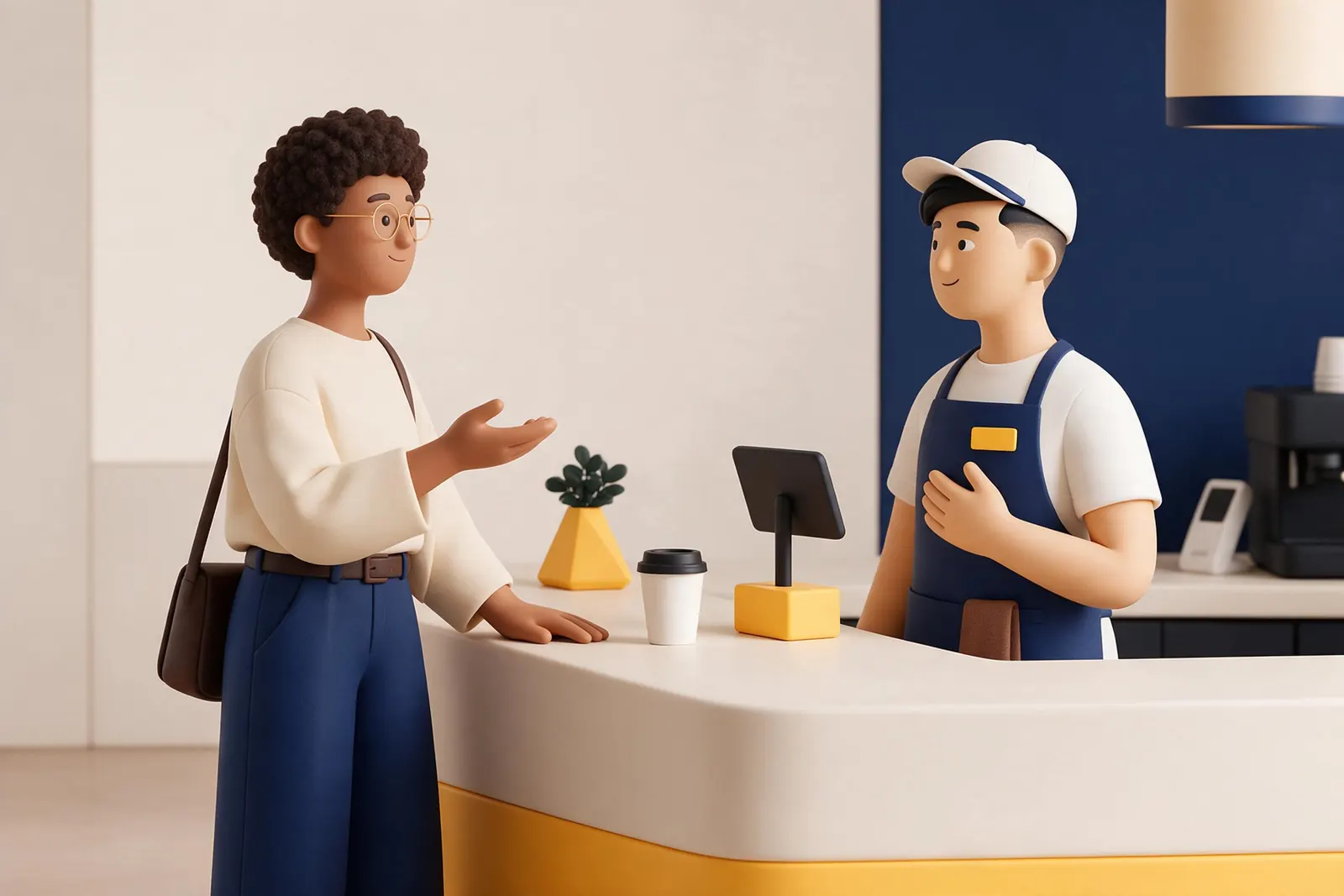 Speaking Up
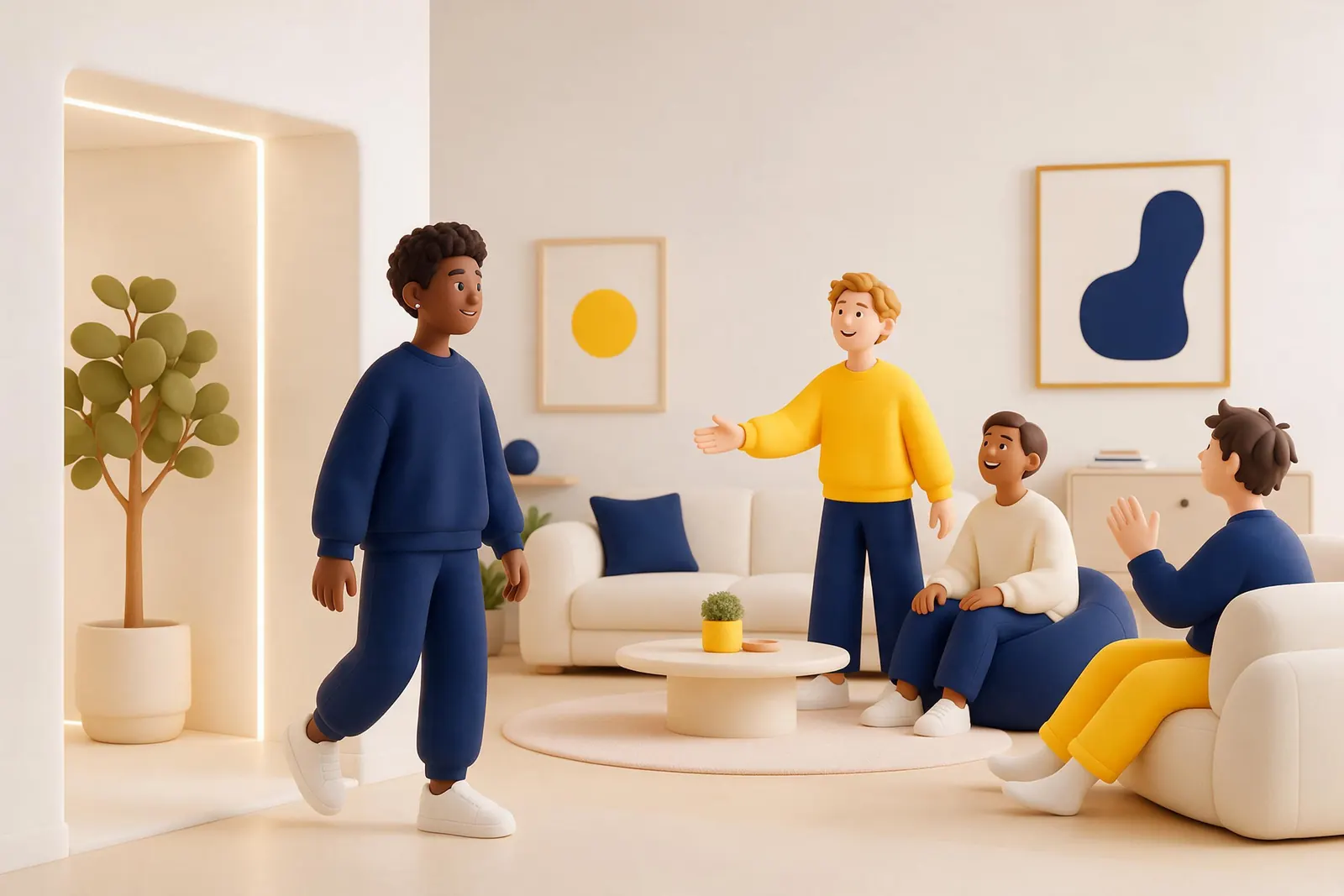 Social Confidence
Free to start. Worth keeping.
- ✓ The first 3 moments in every scene and skill
- ✓ 5 AI coach replies a day
- ✓ Everything in Warm-up, plus:
- ✓ Every moment in all 11 scenes and skills
- ✓ Every new moment we add
- ✓ AI coach on every round — up to 100 a day
- ✓ Everything in Warm-up, plus:
- ✓ Every moment in all 11 scenes and skills
- ✓ Every new moment we add
- ✓ AI coach on every round — up to 100 a day
- ✓ Save ~50% — about $90 a year vs monthly

The best way to communicate better.
Practice the exact moment. Free to start, no card needed.