How to Build Social Confidence Without Faking It
Social confidence isn’t being loud or fearless. It’s saying what you actually think, correcting small things, owning your wins and joining in — calmly, even while you’re a little nervous.
Your name is Rory. You joined a Sunday pickup ultimate frisbee group three weeks ago, and Ignacio, who organizes it, has called you 'Corey' since week one. You let it slide twice because the moment passed. Today he's introducing you to a newcomer.
Free · No sign-up · About a minute
Practice real conversations until you communicate better
Communicate Better is where you practice real conversations. Step into the moment, say it your way, and see how they react — then get coached on a better line.
- Type what you’d say
- See where they’re coming from
- See how it lands — and a better line
How to build social confidence in 4 steps
People with social confidence still get nervous; they just don’t let the nerves pick their words. Social confidence is built in small, low-stakes reps until the scary thing feels ordinary.
Correct small things right away
If someone gets your name, your order or your job wrong, fix it the first time, kindly: “Rory, actually — easy mix-up.” Letting it slide feels polite, but it gets harder every week. A quick, friendly correction is one of the easiest social confidence reps there is.
Say your real opinion, lightly
You don’t have to agree with the group to belong. Give your honest take with warmth and a question: “Good, but not worth the wait for me — what did you order?” Real social confidence means your opinion can be different without it being a fight.
Own your wins out loud
When a friend brings up something you did, don’t shrink it to nothing. Say it plainly, say what was hard, and say you’re proud. Then turn it back to the group. Social confidence isn’t bragging — it’s letting a good thing be good.
Join in before you feel ready
Waiting until you feel confident usually means waiting forever. Say yes to one song, one game, one round of introductions. Confidence tends to show up after you act, not before, which is how most people improve social skills. Each time you join in, your social confidence gets a little sturdier.
Social confidence mistakes that hold people back
- Faking enthusiasm to fit in. Social confidence needs your real opinion, not an echo.
- Shrinking every achievement to “oh, it was nothing.”
- Confusing confidence with volume. Loud and interrupting isn’t socially confident — calm and clear is.
- Waiting to feel ready before you speak up or join in. Social confidence comes after the action, not before.
Social confidence examples: what to say
Here’s what social confidence sounds like in everyday moments — with friends, new people and groups. None of these lines are bold. They’re just honest, warm and clear.
| The moment | Say this | Avoid this |
|---|---|---|
| The organizer introduces you by the wrong name | “Rory, actually. Rhymes with Corey. Nice to meet you!” | Smiling and answering to Corey for another month |
| Your friends rave about a restaurant you found just okay | “Good, but not seventy-minutes good. The salsa was great, though.” | “Yeah, so good.” (you didn’t think so) |
| A friend tells new people about your big achievement | “First one ever. It was slow, but I finished, and I’m proud of it.” | “Oh, I mostly jogged. It’s not a big deal.” |
| The birthday girl pulls you onto the dance floor | “Okay, okay. One song, and you’re picking it.” | “No, I’m good here with the coats.” |
| You walk into a party where you only know the host | “Hi, I’m Sam — I know Nkechi from work. How do you two know her?” | Hovering by the snacks, waiting for someone to rescue you |
| You disagree with a friend’s plan | “I’m honestly not feeling bowling. Could we do tacos instead?” | Going along, then being quiet all night |
How to be yourself and confident at the same time
A lot of people think social confidence means becoming someone else: louder, funnier, more outgoing. It doesn’t. The most socially confident people are usually just comfortable letting others see the real them — their actual opinion, their real name, their honest “I’m nervous but let’s go.” You don’t need a new personality to have social confidence. You need the habit of saying the true, kind thing instead of the safe, empty one.
Social confidence: FAQ
How can I be more socially confident?
Start with small reps: correct your name, share an honest opinion, accept a compliment with “thank you,” and join one group activity. Social confidence grows from evidence — each small moment you handle proves to yourself that you can.
How do I build social confidence as an adult?
The same way at any age: regular practice in low-stakes places. Say hi to a neighbor, ask a coworker one real question, go to a class where people repeat each week. Adults often build social confidence faster because they can choose their practice.
How can I be more confident in social settings?
Give yourself a small job — introduce two people, ask the host how they know everyone, refill drinks. Having something to do takes attention off yourself, which is where social confidence starts. Then aim for one honest sentence at a time, not a perfect performance.
Can you be quiet and still have social confidence?
Absolutely. Social confidence isn’t about talking the most. A quiet person who says what they mean, stays warm and doesn’t apologize for being there is socially confident.
Why do I lose confidence around people?
Usually because your attention turns inward — you start watching yourself instead of the conversation. Shifting focus outward, to the other person and what they’re saying, is one of the quickest ways to feel steadier.
Social confidence isn’t learned from tips. It’s built by doing it.
Communicate Better is built for one thing: helping you communicate better. Step into real moments, say it your way, and see how it lands — until the right words come without thinking.
Learn more about Communicate Better →Type what you’d say
Step into a real moment and reply in your own words, the way you’d actually say it. No multiple choice, no script.
See where they’re coming from
Then call what’s going on for them, what they mean and how they feel, and find out right away whether you read them right.
See how it lands — and a better line
An AI plays the other person and reacts to what you actually wrote. Then a coach shows you a better line and why it works. The moments you miss come back until you’ve got them.
7 scenes and 4 core skills — practice them all
1,100+ real moments to practice, from your first hello to the hardest talk.
 New People
Openers, small talk, reading if they want to keep going, making new friends.
How to start a conversation → Dating
 Relationships
Needs, comfort, fights, a partner who’s gone quiet, apologies, big decisions.
How to communicate better with your partner → Friends
 Work & Career
Meetings, feedback, being overlooked, asking for a raise, networking.
Communication in the workplace → Messages & Online
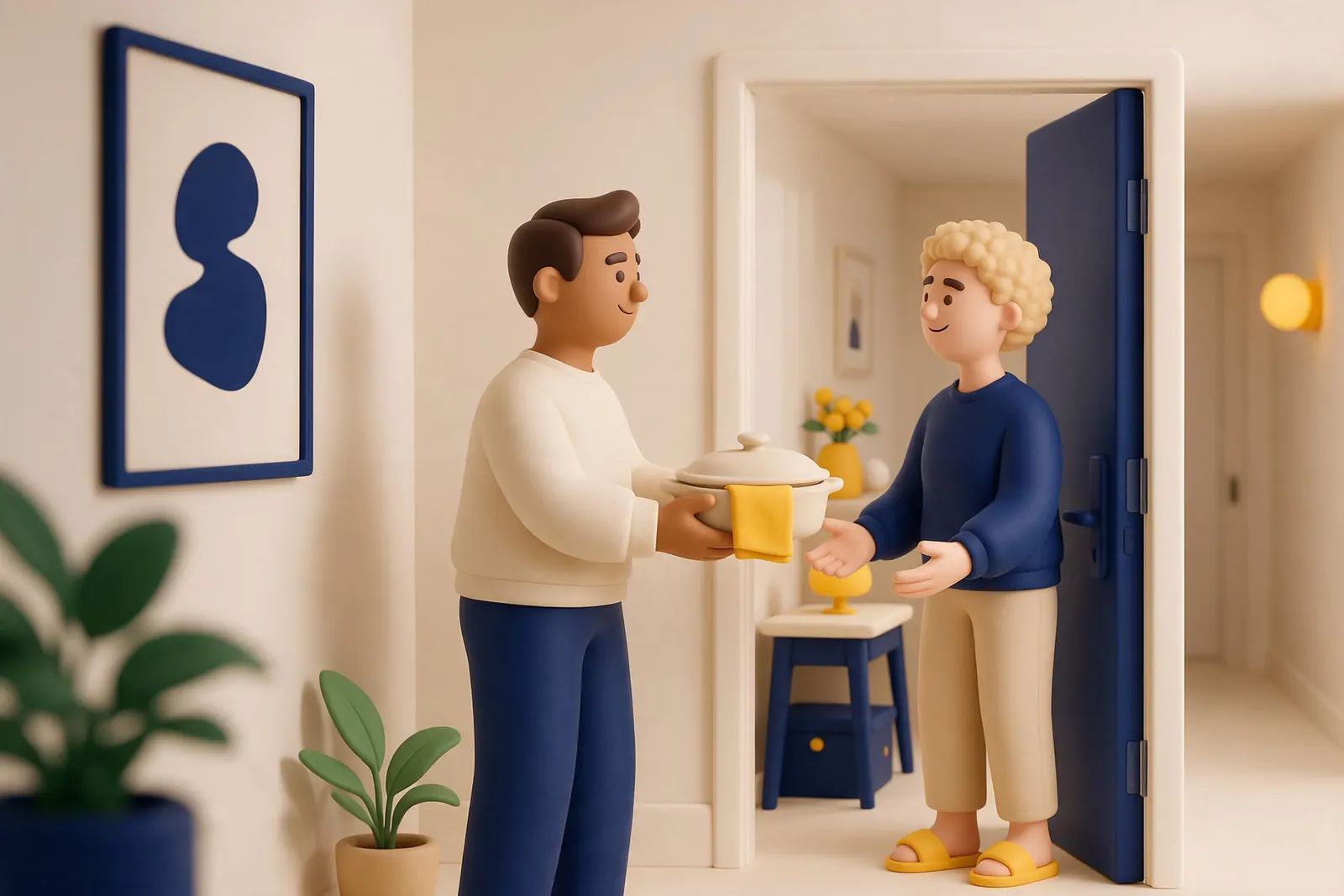 Everyday Life
New moments added all the time — and you can send in one of your own.
 Reading People
 Conversation Skills
 Speaking Up
 Social Confidence
Free to start. Worth keeping.
- ✓ The first 3 moments in every scene and skill
- ✓ 5 AI coach replies a day
- ✓ Everything in Warm-up, plus:
- ✓ Every moment in all 11 scenes and skills
- ✓ Every new moment we add
- ✓ AI coach on every round — up to 100 a day
- ✓ Everything in Warm-up, plus:
- ✓ Every moment in all 11 scenes and skills
- ✓ Every new moment we add
- ✓ AI coach on every round — up to 100 a day
- ✓ Save ~50% — about $90 a year vs monthly

The best way to communicate better.
Practice the exact moment. Free to start, no card needed.