Social Skills Training for Adults: Practice Real Moments, Not Theory
Good social skills training for adults works like any other training: pick specific everyday moments — a phone call, a hello, a polite no — practice what to say, get feedback, and repeat until it feels normal.
You've gone to a Tuesday night yoga class for two months, always on a mat by the window. At the grocery store, you turn into the cereal aisle and nearly bump carts with a woman from that class who's always in the front row. You've never talked.
Free · No sign-up · About a minute
Practice real conversations until you communicate better
Communicate Better is where you practice real conversations. Step into the moment, say it your way, and see how they react — then get coached on a better line.
- Type what you’d say
- See where they’re coming from
- See how it lands — and a better line
Social skills training for adults in 4 steps
Most of us never got lessons in calling a receptionist or saying no to a stranger. Social skills training for adults is just small, specific reps, honest feedback and a bit of repetition.
Pick one moment you avoid
“Get better with people” is too vague to practice, even if you want to improve social skills fast. Pick a single moment instead: calling to book something, saying hi to someone you half-know, asking a question in a group, ending a chat politely. Social skills training for adults works best when the target is small enough to try this week.
Prepare one or two lines
Have a short, natural line ready before you need it: “That won’t work for me — anything after 5:30?” or “I’m going to read for a while, but have a great trip.” A prepared line isn’t fake. It just keeps your brain from going blank under pressure.
Practice where the stakes are low
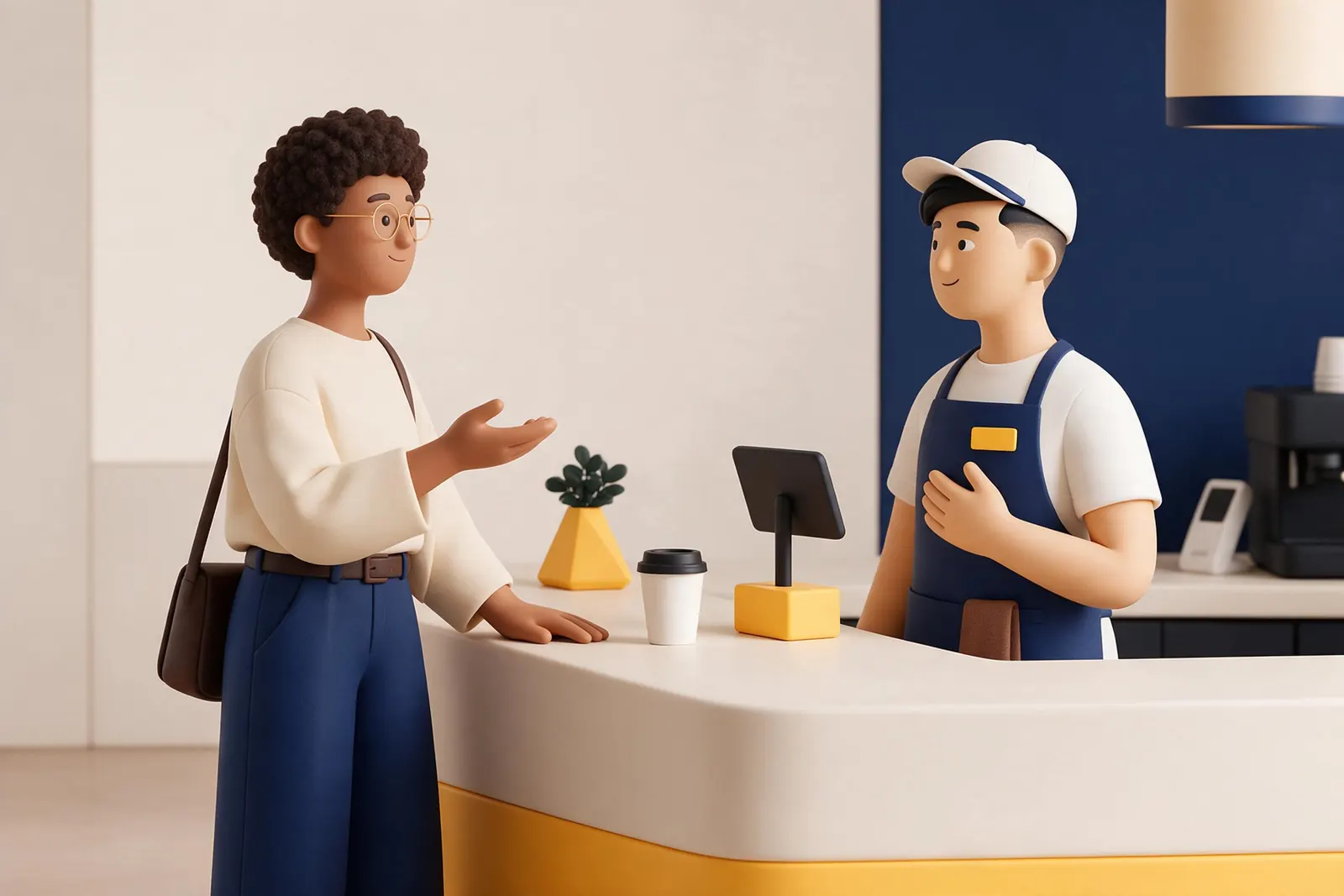
Try the line on a cashier, in a class, in an online scene or a social skills game, or out loud to yourself first. Role-play with a friend works too. The point of social skills training for adults is to make the words familiar before the moment that really matters.
Review, adjust, repeat
After each try, ask: did I say what I meant? How did they react? What would I change? Then do it again. Skills stick through repetition, not one big breakthrough — ten small reps beat one perfect speech.
Social skills training for adults: mistakes to avoid
- Reading about social skills for months without ever trying one out loud.
- Starting with the hardest moment in your life instead of an easy, everyday one.
- Memorizing long scripts. Short lines sound natural; long ones sound rehearsed.
- Judging one awkward try as failure. Awkward reps are how everyone gets better.
Social skills training for adults: everyday examples
These are the kind of ordinary adult moments social skills training for adults should cover — asking, declining, joining in and saying thanks. Each one has a practice scene.
| The moment | Say this | Avoid this |
|---|---|---|
| You bump carts with someone from your yoga class | “Hi! Tuesday yoga, I’m the one by the window. Funny seeing you here.” | A panicked smile and a fast U-turn |
| The receptionist offers a 7:40 a.m. slot you can’t make | “That won’t work for me. Anything after 5:30, or a Saturday?” | “Uh… sure, I’ll make it work.” |
| A stranger asks for your paid aisle seat | “I booked the aisle for my knees, so I’ll keep it. A flight attendant might find you a swap.” | Saying yes and aching for five hours |
| Your teacher asks if there are questions and you’re lost | “Yes — could you do one more example? I lost it halfway.” | Nodding along with everyone else |
| A seatmate keeps chatting when you want to read | “I’m going to disappear into this for a while — have an amazing time.” | Half-listening for three more hours |
| A friend saw you weren’t sure about their gift | “Thank you, it’s so soft. Yellow’s never worked on me — help me pick a swap?” | “No, I love it!” (and it never leaves the closet) |
Social skills training options for adults
There are a few ways to get social skills training as an adult. Community classes — improv, public speaking, a language class — give you built-in practice with other people. Therapists and counselors can help if anxiety is what’s holding you back. Friends can role-play a tough conversation with you. And practice scenes like the ones on this site let you try a response, see how the other person would likely react, and learn why a better line works — as often as you like, with no audience.
Social skills training for adults: FAQ
What is social skills training?
Social skills training is structured practice for everyday interactions: starting conversations, asking for what you need, saying no, reading how people feel. It usually mixes a short explanation, a model of what to say, practice, and feedback.
Can adults really improve their social skills?
Yes. Social skills are learned behavior, not a fixed trait. Adults improve the same way they learn anything else: specific practice, feedback and repetition. Many people notice a difference once a few everyday moments start to feel routine.
How can I practice social skills alone?
Rehearse lines out loud, write down how a conversation went and what you’d change, and use practice scenes online. Then take one line into a real, low-stakes moment each week, like ordering or chatting with a neighbor.
Where can adults get social skills training?
Community colleges, improv and public speaking groups, therapists who work on social anxiety, and online practice tools. Pick the one that gets you practicing most often — frequency matters more than format.
How long does social skills training for adults take?
There’s no fixed timeline. One moment, like booking by phone, can feel easier after a handful of tries. Broader confidence builds over weeks and months of steady, small practice.
Social skills training for adults isn’t a lecture. It’s practice.
Communicate Better is built for one thing: helping you communicate better. Step into real moments, say it your way, and see how it lands — until the right words come without thinking.
Learn more about Communicate Better →Type what you’d say
Step into a real moment and reply in your own words, the way you’d actually say it. No multiple choice, no script.
See where they’re coming from
Then call what’s going on for them, what they mean and how they feel, and find out right away whether you read them right.
See how it lands — and a better line
An AI plays the other person and reacts to what you actually wrote. Then a coach shows you a better line and why it works. The moments you miss come back until you’ve got them.
7 scenes and 4 core skills — practice them all
1,100+ real moments to practice, from your first hello to the hardest talk.
 New People
Openers, small talk, reading if they want to keep going, making new friends.
How to start a conversation → Dating
 Relationships
Needs, comfort, fights, a partner who’s gone quiet, apologies, big decisions.
How to communicate better with your partner → Friends
 Work & Career
Meetings, feedback, being overlooked, asking for a raise, networking.
Communication in the workplace → Messages & Online
 Everyday Life
New moments added all the time — and you can send in one of your own.
 Reading People
 Conversation Skills
 Speaking Up
 Social Confidence
Free to start. Worth keeping.
- ✓ The first 3 moments in every scene and skill
- ✓ 5 AI coach replies a day
- ✓ Everything in Warm-up, plus:
- ✓ Every moment in all 11 scenes and skills
- ✓ Every new moment we add
- ✓ AI coach on every round — up to 100 a day
- ✓ Everything in Warm-up, plus:
- ✓ Every moment in all 11 scenes and skills
- ✓ Every new moment we add
- ✓ AI coach on every round — up to 100 a day
- ✓ Save ~50% — about $90 a year vs monthly

The best way to communicate better.
Practice the exact moment. Free to start, no card needed.