Open-Ended Questions Examples (and the Closed Versions to Swap Out)
An open-ended question can’t be answered with yes, no or one word. It asks for a story, a reason or a feeling: “What was the best part?” instead of “Did you have fun?” The open-ended questions examples below show that swap in 30 everyday moments.
You manage a small team. Yara, usually chatty in your weekly one-on-ones, has been quiet for two weeks, and her last sprint slipped a little. You want to find out what's going on without making her feel like she's in trouble.
Free · No sign-up · About a minute
Practice real conversations until you communicate better
Communicate Better is where you practice real conversations. Step into the moment, say it your way, and see how they react — then get coached on a better line.
- Type what you’d say
- See where they’re coming from
- See how it lands — and a better line
30 open-ended questions examples, next to the closed version
Each of these open-ended questions examples sits next to the closed version people usually ask in the same moment. They run from everyday chats with friends to work, family and customer conversations. Use these open-ended questions examples as swaps, not scripts.
Friends and new people
- A friend comes back from a trip“What was the best part of the trip?”Skip: “Did you have fun?”
- A friend just saw a movie“What did you think of the ending?”Skip: “Was it good?”
- Catching up with a friend“What’s taking up most of your time these days?”Skip: “Anything new?”
- A friend seems off“How are you doing, really? What’s been going on?”Skip: “Are you okay?”
- A friend is torn about big news“What’s pulling you toward it, and what’s pulling you to stay?”Skip: “Don’t you think you should take it?”
- A friend just started dating someone“What do you like about them so far?”Skip: “Is it serious?”
- Meeting someone new“What brought you to this city?”Skip: “Are you from here?”
- They mention a hobby“How did you get into that?”Skip: “Do you do it a lot?”
- They mention their job“What does a normal day look like for you?”Skip: “Do you like it?”
Family
- A parent’s surprising decision“What got you excited about the idea?”Skip: “Why on earth would you do that?”
- A grandparent, on a visit“What was your first job like?”Skip: “Did you work when you were young?”
- Your kid after school“What was the funniest thing that happened today?”Skip: “How was school?” (gets “fine”)
- A teenager who shrugs a lot“What’s the best thing you watched this week?”Skip: “Did you do anything fun?”
Your partner
- Your partner after a long day“What was the best part of your day, even if it was tiny?”Skip: “Good day?”
- Your partner seems stressed“What’s weighing on you most right now?”Skip: “Is it work again?”
- Planning something together“What would make this weekend feel good for you?”Skip: “Do you want to go out Saturday?”
At work
- A one-on-one with a quiet team member“What’s been the hardest part of the last couple of weeks?”Skip: “Is everything okay?”
- Checking in on a project“What’s getting in the way right now?”Skip: “Are you on track?”
- After a project wraps“What would you do differently next time?”Skip: “Did it go well?”
- A new hire’s first week“What’s surprised you so far?”Skip: “Settling in okay?”
- Giving feedback“How do you think that presentation went?”Skip: “Were you happy with it?”
- Interviewing a candidate“Tell me about a time a project didn’t go to plan. What did you do?”Skip: “Are you good under pressure?”
- In a job interview, your turn to ask“What does success look like in this role after six months?”Skip: “Is the team nice?”
Customers and sales
- A first sales call“Walk me through the last time a day’s schedule fell apart. What happened?”Skip: “Do you have problems with scheduling?”
- Finding out what a customer needs“What have you already tried, and what didn’t work?”Skip: “Are you happy with your current tool?”
- Getting feedback from a customer“What almost stopped you from signing up?”Skip: “Would you recommend us?”
- A survey or feedback form“What’s one thing we could do better?”Skip: “Were you satisfied? Yes / No”
When it matters more
- Someone shares something hard“What’s that been like for you?”Skip: “Are you sad about it?”
- Helping someone decide“What matters most to you here?”Skip: “So are you going to do it or not?”
- Going a little deeper“What’s something you’ve changed your mind about recently?”Skip: “Have you ever changed your mind about something big?”
When closed questions are better
Closed questions aren’t bad. They’re the right tool for plans, facts and confirming what you heard: “Are you free Saturday at noon?”, “So the deadline is Friday?”, “Did I get that right?” The trick is knowing which one you need. Use closed questions to decide and confirm; use open-ended questions to understand. If you’re trying to keep a conversation going and it keeps dying at one-word answers, look back at the questions you asked, then swap in one of the open-ended questions examples above.
How to ask open-ended questions
An open-ended question can’t be answered in one word, so it gets people actually talking. The open-ended questions examples below show the swap, and these four steps show how to ask them well.
Start with what, how, or “tell me about”
“Did you have a good trip?” becomes “What was the best part of the trip?” “Is work busy?” becomes “What’s taking up most of your week?” Most open-ended questions examples follow this simple swap: keep the topic, change the first word.
Be careful with “why”
“Why would you do that?” is technically open, but it often sounds like a demand to justify yourself. “What got you excited about it?” asks the same thing with curiosity. When in doubt, turn a why into a what, a habit every good conversationalist picks up.
Don’t slip your answer inside
“Don’t you think you should take the job?” is a closed question pretending to be open. A real open-ended question doesn’t hint at the answer you want: “What’s pulling you each way?” helps someone think instead of defend. In the open-ended questions examples below, the closed version on the right often hides an opinion like this.
Ask for a story when a question isn’t enough
Some of the best open-ended questions examples aren’t questions at all: “Walk me through the last time that happened” or “Tell me about your first week.” A request for a specific story gets real detail, while “What are your challenges?” gets a vague list.
Common mistakes with open-ended questions
- “Is everything okay?” when you can see it isn’t. It invites a quick “yep.”
- Asking two or three questions at once, so they only answer the easiest one.
- Leading questions like “Wouldn’t it be better to…?” that only look open.
- Asking a great open question and then interrupting the answer.
Open ended questions examples: FAQ
What is an open-ended question?
An open-ended question is one that can’t be answered with yes, no or a single word. It usually starts with what, how, or “tell me about,” and asks for a story, reason or feeling. “What was the best part?” is open; “Was it fun?” is closed.
What are some examples of open-ended questions?
Common open-ended questions examples: “What was the best part of your day?”, “How did you get into that?”, “What’s been the hardest part of this week?”, “What would you do differently next time?”, “Tell me about your first week.” Each one invites more than a yes or no.
What’s the difference between open and closed questions?
A closed question has a short, fixed answer: yes, no, a number or a name. An open question leaves the answer up to the other person. Closed questions are good for facts and decisions; open questions are good for understanding people and keeping a conversation going. The open-ended questions examples on this page show both side by side.
How do you ask open-ended questions?
Take a closed question and change the first word: “Did you like it?” becomes “What did you like about it?” Ask one question at a time, don’t hint at the answer you want, and then let the other person finish without interrupting. Reading open-ended questions examples helps, but saying them out loud is what makes them stick.
Is a “why” question open-ended?
Yes, but it can sound like a challenge. “Why did you do that?” can make people defend themselves. “What made you decide to…?” or “What got you excited about…?” keeps the question open and sounds curious instead. Several open-ended questions examples on this page make exactly that swap.
Open-ended questions examples are easy to read. Asking them in the moment takes practice.
Communicate Better is built for one thing: helping you communicate better. Step into real moments, say it your way, and see how it lands — until the right words come without thinking.
Learn more about Communicate Better →Type what you’d say
Step into a real moment and reply in your own words, the way you’d actually say it. No multiple choice, no script.
See where they’re coming from
Then call what’s going on for them, what they mean and how they feel, and find out right away whether you read them right.
See how it lands — and a better line
An AI plays the other person and reacts to what you actually wrote. Then a coach shows you a better line and why it works. The moments you miss come back until you’ve got them.
7 scenes and 4 core skills — practice them all
1,100+ real moments to practice, from your first hello to the hardest talk.
 New People
Openers, small talk, reading if they want to keep going, making new friends.
How to start a conversation → Dating
 Relationships
Needs, comfort, fights, a partner who’s gone quiet, apologies, big decisions.
How to communicate better with your partner → Friends
 Work & Career
Meetings, feedback, being overlooked, asking for a raise, networking.
Communication in the workplace → Messages & Online
 Everyday Life
New moments added all the time — and you can send in one of your own.
 Reading People
 Conversation Skills
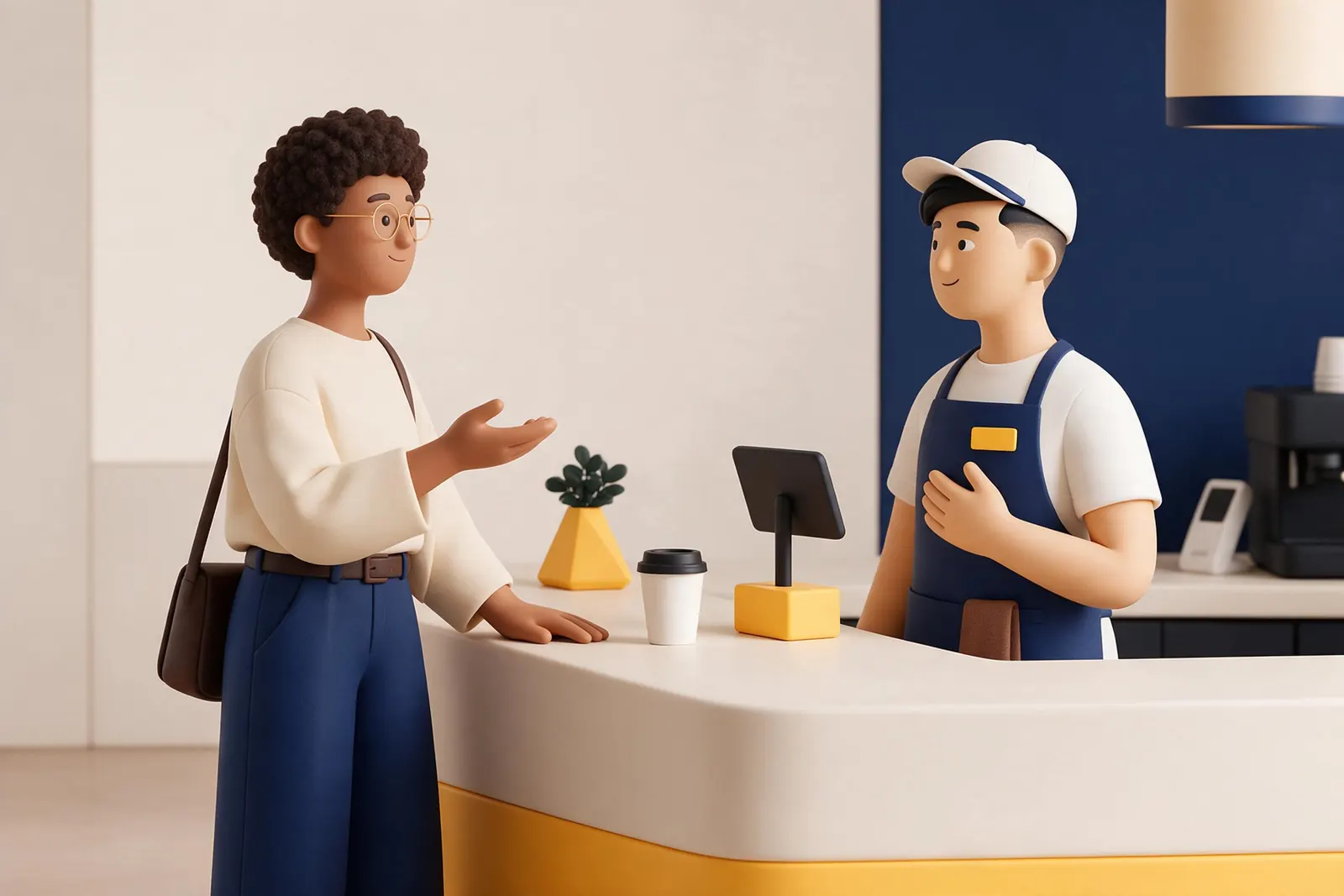 Speaking Up
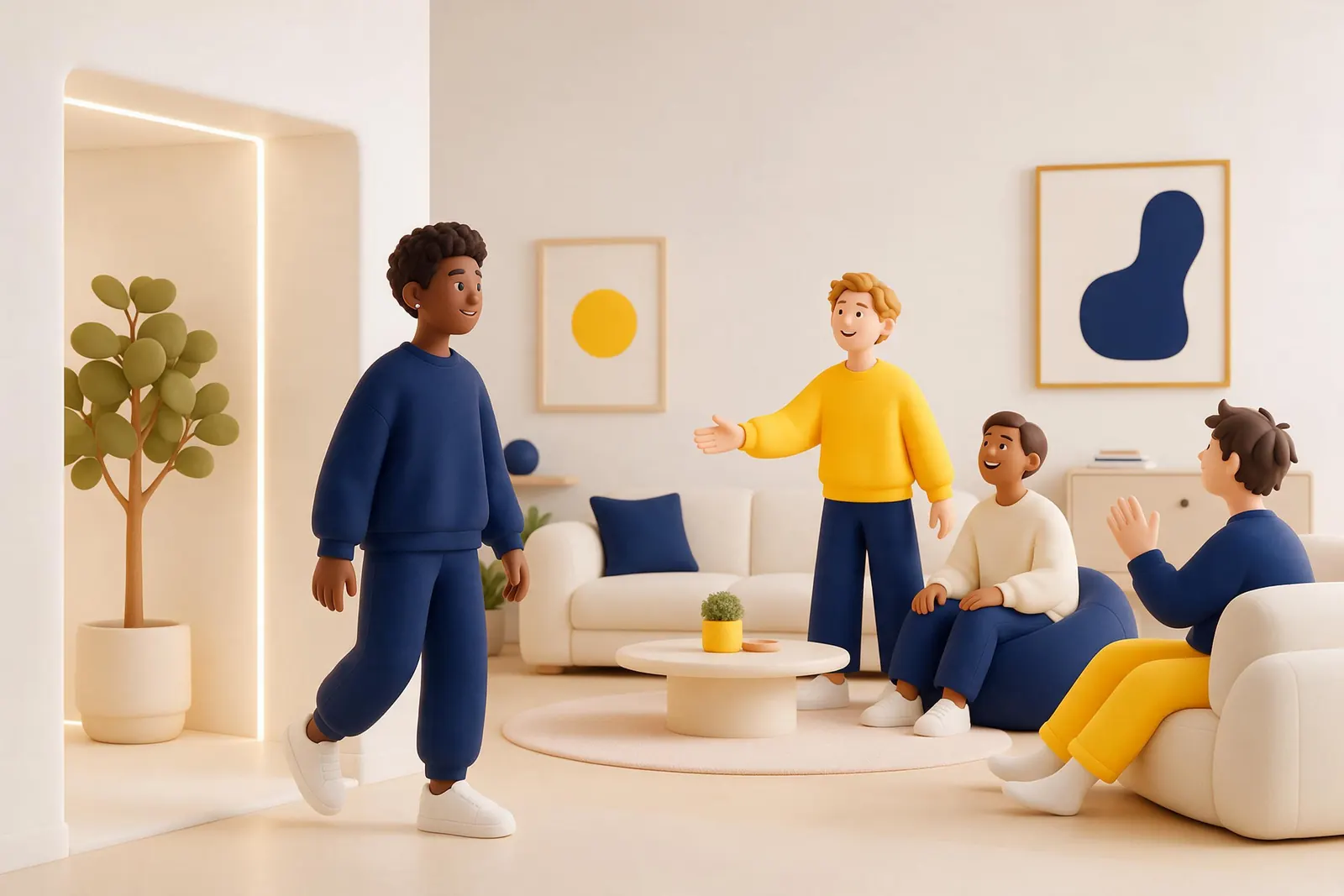 Social Confidence
Free to start. Worth keeping.
- ✓ The first 3 moments in every scene and skill
- ✓ 5 AI coach replies a day
- ✓ Everything in Warm-up, plus:
- ✓ Every moment in all 11 scenes and skills
- ✓ Every new moment we add
- ✓ AI coach on every round — up to 100 a day
- ✓ Everything in Warm-up, plus:
- ✓ Every moment in all 11 scenes and skills
- ✓ Every new moment we add
- ✓ AI coach on every round — up to 100 a day
- ✓ Save ~50% — about $90 a year vs monthly

The best way to communicate better.
Practice the exact moment. Free to start, no card needed.