How to Be Engaging in Conversation (Without Performing)
Here’s how to be engaging: talk about things everyone in the group can join, tell people when their advice worked, give a tired room something small to do, and ask questions that are easy to answer right now. The secret of how to be engaging: don’t perform — they make it easy for others to jump in.
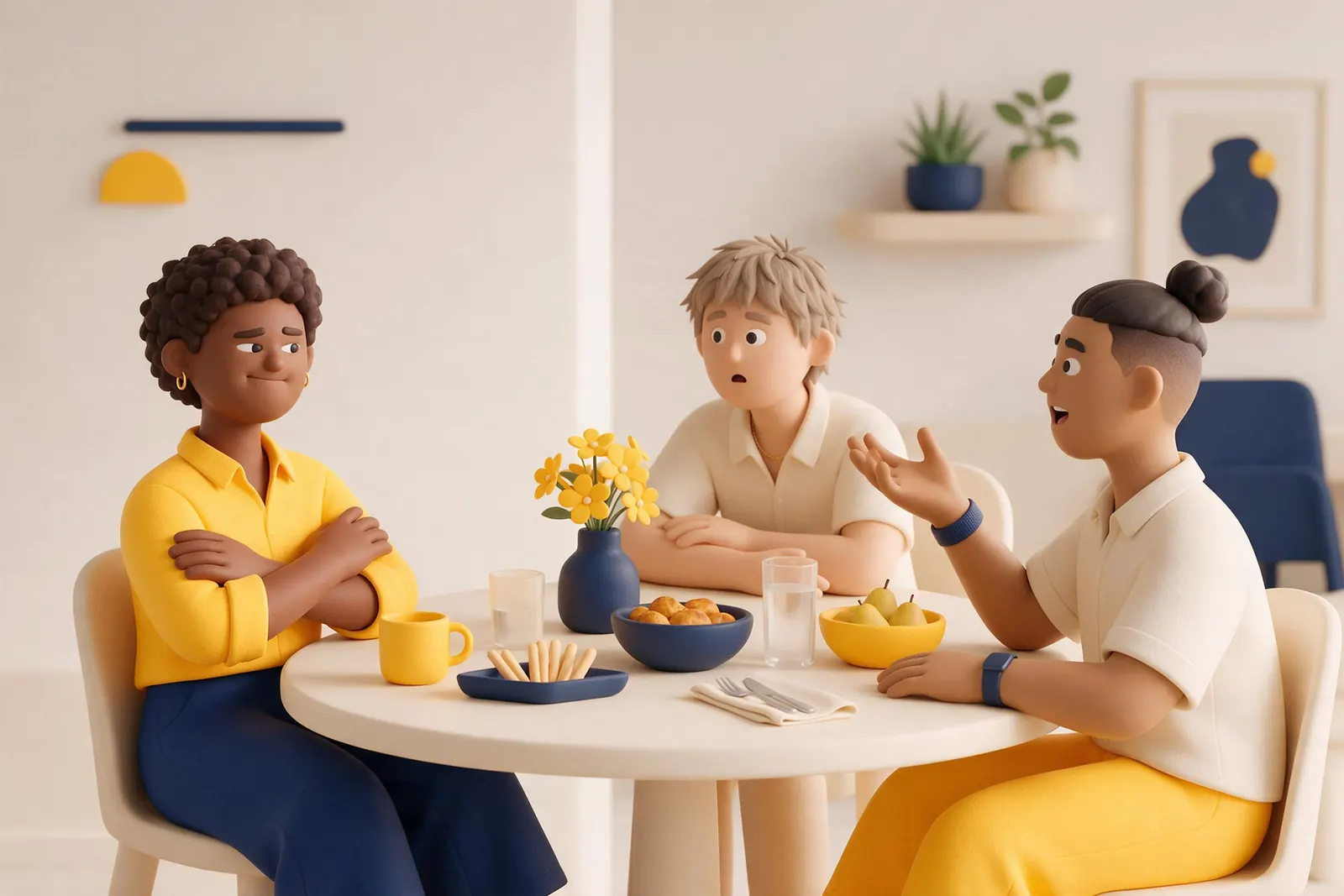
At your friend Nell's birthday drinks, you found out Idris works in your industry, and for twenty minutes you've been trading stories about both your companies' reorgs. Mireille, Nell's friend from her book club, has been standing with you two the whole time. When Nell introduced her, she mentioned Mireille just got back from a road trip to Montreal.
Free · No sign-up · About a minute
Practice real conversations until you communicate better
Communicate Better is where you practice real conversations. Step into the moment, say it your way, and see how they react — then get coached on a better line.
- Type what you’d say
- See where they’re coming from
- See how it lands — and a better line
How to be engaging in 4 steps
The most engaging person in the room is usually the one who makes others feel included, not the one with the best stories. Here’s how to be engaging without performing.
Pick topics everyone can join
Two people talking shop in a group of three isn’t a conversation — it’s a show with an audience of one. Notice who’s been standing there quietly and hand them a topic they own: “Nell said you just got back from Montreal — how was it?” That’s how to be engaging in a group.
Close the loop on what people told you
When someone recommends a show, a restaurant or a fix and you try it, tell them. “You were right about the brisket” makes people feel heard in a way no clever question can. It also gives you an easy, warm opener next time you see them, which is how you connect with people over time.
Give a tired room something to do
When people have been sitting and listening for a long time, words alone won’t reach them. Ask for a show of hands, a quick guess or a one-word answer before you start. A small action wakes people up faster than a joke.
Shrink big questions
“What are you passionate about?” makes most people freeze. Ask something easy to answer right now: “What’s the best thing you did last weekend?” The deeper stuff tends to follow once people are talking. Knowing how to be engaging means knowing which questions are too big for the moment.
How to be engaging: mistakes to avoid
- Performing — nonstop jokes and stories that leave no room for anyone else.
- Talking shop or inside jokes in front of people who can’t join.
- Asking huge “deep” questions to people you just met.
- Asking for recommendations and never mentioning them again.
How to be engaging: examples of what to say
Here’s how to be engaging in groups, at work and with new people — by making it easy for others to join in.
| The moment | Say this | Avoid this |
|---|---|---|
| A friend has been left out of your work talk for twenty minutes | “No quiz, we’re done. Nell said you drove to Montreal — how was it?” | “Sorry, you wouldn’t get it — it’s a work thing.” |
| You tried a coworker’s barbecue recommendation | “I finally went to your barbecue place. You were right, and I’m a little annoyed.” | “Good weekend, thanks.” |
| You speak to new hires after two hours of slides | “Show of hands: who’s already in more Slack channels than they can count?” | “So, I’m going to walk you through our team structure.” |
| Your big “passion” question fell flat at a barbecue | “Fair, that’s a lot for a barbecue. What’s the best thing you did last weekend?” | “Come on, everyone has a passion.” |
| A group chat has gone quiet for days | “Settling a debate: is a hot dog a sandwich? I need votes.” | “Hello?? Anyone alive?” |
| A quiet coworker in a meeting | “Priya, you worked on the last launch — what would you change?” | Letting the same two people talk for the whole meeting |
What makes someone engaging?
An engaging person pays attention to the whole room, not just to the conversation they’re in. They remember what you told them, react with real feeling, and make it easy for you to add something. That’s how to be engaging as a quiet person, too — some quiet people are incredibly engaging and some very loud people are exhausting: engagement is about how others feel with you, not how much you say — the same thing that makes a good conversationalist.
How to be engaging: FAQ
How do you engage in conversation when you’re shy?
Lean on questions and reactions rather than stories. Ask about something the other person just said, react honestly (“Wait, really?”), and share one small detail about yourself. You don’t have to be loud to be engaging.
How can I be more engaging with people?
Remember details and bring them up later, include people on the edge of the group, and ask easy, specific questions. Tell people when their advice helped. These small habits are how to be engaging without changing your personality.
What makes a conversation engaging?
Back-and-forth. Both people ask, both share, both react. An engaging conversation has specific details, a little humor and moments where one person follows up on something the other said.
How do you engage a group of people?
Choose topics everyone can join, draw in whoever has been quiet, and give people something small to do or answer — a vote, a guess, a quick show of hands. Groups disengage when two people take over.
How do I make my talk or presentation more engaging?
Start with something the audience does, not something you say — a show of hands or a quick question. Keep sentences short, use one real story and stop before people get tired.
How to be engaging isn’t learned from a list. It’s built by practicing.
Communicate Better is built for one thing: helping you communicate better. Step into real moments, say it your way, and see how it lands — until the right words come without thinking.
Learn more about Communicate Better →Type what you’d say
Step into a real moment and reply in your own words, the way you’d actually say it. No multiple choice, no script.
See where they’re coming from
Then call what’s going on for them, what they mean and how they feel, and find out right away whether you read them right.
See how it lands — and a better line
An AI plays the other person and reacts to what you actually wrote. Then a coach shows you a better line and why it works. The moments you miss come back until you’ve got them.
7 scenes and 4 core skills — practice them all
1,100+ real moments to practice, from your first hello to the hardest talk.
 New People
Openers, small talk, reading if they want to keep going, making new friends.
How to start a conversation → Dating
 Relationships
Needs, comfort, fights, a partner who’s gone quiet, apologies, big decisions.
How to communicate better with your partner → Friends
 Work & Career
Meetings, feedback, being overlooked, asking for a raise, networking.
Communication in the workplace → Messages & Online
 Everyday Life
New moments added all the time — and you can send in one of your own.
 Reading People
 Conversation Skills
 Speaking Up
 Social Confidence
Free to start. Worth keeping.
- ✓ The first 3 moments in every scene and skill
- ✓ 5 AI coach replies a day
- ✓ Everything in Warm-up, plus:
- ✓ Every moment in all 11 scenes and skills
- ✓ Every new moment we add
- ✓ AI coach on every round — up to 100 a day
- ✓ Everything in Warm-up, plus:
- ✓ Every moment in all 11 scenes and skills
- ✓ Every new moment we add
- ✓ AI coach on every round — up to 100 a day
- ✓ Save ~50% — about $90 a year vs monthly

The best way to communicate better.
Practice the exact moment. Free to start, no card needed.