What Is a Frenemy? The Meaning, the Signs, and What to Say
Here’s the frenemy meaning in plain words: the signs to watch for, and what to say when one plays down your good news.
A friend who is also a quiet rival. They’re warm to your face, but they tend to compete with you, play down your wins, or pass along things you told them in confidence.
- “Congrats on the promotion! I guess they needed someone fast.”
- “I only told her because I figured you’d want people to know.”
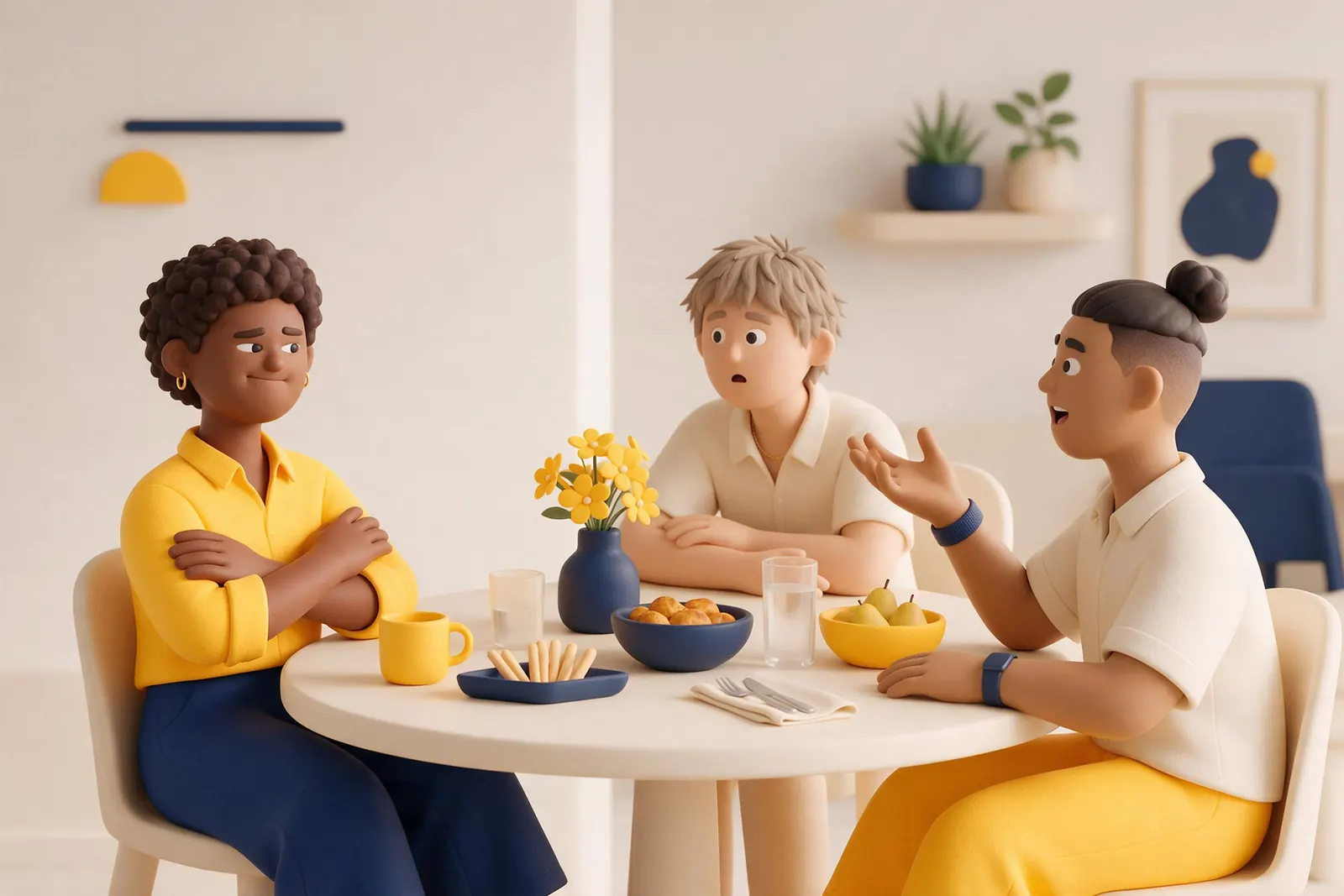
At brunch, you tell your friends you got the senior designer role you've been working toward for two years. Before anyone else can react, your friend Brooke jumps in.
Free · No sign-up · About a minute
Practice real conversations until you communicate better
Communicate Better is where you practice real conversations. Step into the moment, say it your way, and see how they react — then get coached on a better line.
- Type what you’d say
- See where they’re coming from
- See how it lands — and a better line
Frenemy meaning: 4 signs you have one
A frenemy is a friend who competes in a way that leaves you feeling smaller. Spotting one early saves you a lot of second-guessing.
A frenemy shrinks your wins
You share a promotion, and a frenemy jumps in with “Oh, I was offered that too, but the pay isn’t worth it.” No “congrats,” just a quick one-up and a quiet dig. A good friend can feel a flash of envy and still say “That’s amazing.” The frenemy skips that part.
A frenemy lights up for your bad news
Tell a frenemy you got a raise and you get a flat “congrats.” Tell them your apartment fell through and suddenly it’s “WAIT, tell me everything.” Notice who shows up for your good news, not just your bad. That gap is one of the clearest frenemy signs.
Secrets travel through a frenemy
A frenemy leans in with “You did NOT hear this from me…” about another friend. If a frenemy hands you someone else’s secret, assume they’ll hand off yours too. Gossip is how a frenemy buys closeness with one person by spending another’s trust.
A frenemy changes around an audience
One-on-one, a frenemy is great. In a group, they laugh when someone mocks you, or barely look your way. A frenemy treats you like a friend in private and a rival in public. Judge a friend by how they treat you in front of others.
How to deal with a frenemy: mistakes to skip
- Competing back. Topping a frenemy’s one-up with your own turns every hangout into a scoreboard.
- Arguing with the frenemy’s dig (“Actually, the pay is great”). You end up defending your good news instead of enjoying it.
- A big confrontation over a pattern a frenemy can easily deny. Name one specific moment instead.
- Calling every competitive friend a frenemy. Wanting to beat you is fine — refusing to cheer when you win is the sign.
What to say to a frenemy: examples
Here’s what to say to a frenemy in the moments that usually catch you off guard — short, calm lines that keep your dignity without starting a fight.
| The moment | Say this | Avoid this |
|---|---|---|
| A frenemy copied a plan you told them about | “I’m not mad, but it stings a little. I’m going to keep my recipes to myself.” | “Ha, great minds!” and swallowing it |
| A frenemy asks what you earn | “Ha, I keep that one to myself. How’s your team been?” | Giving the number, then feeling weird all night |
| A frenemy only lights up for your bad news | “Thanks — I’m okay, just bummed. How’s your week going?” | Pouring out every detail to them first |
| A frenemy says “you used to be fun” | “Still fun, just not drinking this month.” | A long explanation of why |
| You might be the frenemy | “You’re right, I’ve been distant. Some of it is envy, and that’s on me.” | “What? No, I’ve just been busy.” |
| A friend beats your best time | “Enjoy it while it lasts. Rematch Saturday.” | Deciding they’re a frenemy for wanting to win |
Frenemy or just a competitive friend?
A competitive friend wants to beat you and is happy when you win. A frenemy needs you to lose a little. The test is simple: after your best news, do they cheer? If yes, that’s not a frenemy — enjoy the rivalry. If a frenemy keeps shrinking you, you don’t have to end it dramatically, as with most bad friendships. Share less, see them in groups, and invest your time in the friends who celebrate you. Sometimes the frenemy is you — envy happens to everyone, and naming it honestly is how you stop being one.
Frenemy: FAQ
What does frenemy mean?
Frenemy means a friend who is also a rival. The word blends “friend” and “enemy” and describes someone who acts friendly but competes with you, undermines your wins, or talks behind your back. It’s usually subtle, which is why a frenemy can be hard to spot.
What are the signs of a frenemy?
The common frenemy signs: they one-up or shrink your good news, get more interested when things go wrong for you, pass on other people’s secrets, act differently around a group, and give “honest” criticism with no specifics. One of these is a bad day. A steady pattern is a frenemy.
How do you deal with a frenemy?
With a frenemy, stay calm, don’t compete, and share less. Keep your good news at full size (“I’m really happy about it”), decline gossip, and ask for specifics when they criticize. If it matters to you, name one moment directly: “That comment at dinner stung. What was that about?”
Is it a frenemy or am I being too sensitive?
Look for a pattern, not one comment. Anyone can blurt out something clumsy. If you leave most hangouts feeling smaller, and they rarely celebrate your wins, trust that — that’s a frenemy. If they cheer for you but also like to compete, it’s probably a competitive friend, not a frenemy.
Should I end a friendship with a frenemy?
You don’t have to make it official. Many people just let a frenemy become an acquaintance: less personal news, more group settings, less of your time. If the frenemy is someone you care about, one honest conversation can turn it back into a real friendship.
Handling a frenemy isn’t about the perfect comeback. It’s a calm you practice.
Communicate Better is built for one thing: helping you communicate better. Step into real moments, say it your way, and see how it lands — until the right words come without thinking.
Learn more about Communicate Better →Type what you’d say
Step into a real moment and reply in your own words, the way you’d actually say it. No multiple choice, no script.
See where they’re coming from
Then call what’s going on for them, what they mean and how they feel, and find out right away whether you read them right.
See how it lands — and a better line
An AI plays the other person and reacts to what you actually wrote. Then a coach shows you a better line and why it works. The moments you miss come back until you’ve got them.
7 scenes and 4 core skills — practice them all
1,100+ real moments to practice, from your first hello to the hardest talk.
 New People
Openers, small talk, reading if they want to keep going, making new friends.
How to start a conversation → Dating
 Relationships
Needs, comfort, fights, a partner who’s gone quiet, apologies, big decisions.
How to communicate better with your partner → Friends
 Work & Career
Meetings, feedback, being overlooked, asking for a raise, networking.
Communication in the workplace → Messages & Online
 Everyday Life
New moments added all the time — and you can send in one of your own.
 Reading People
 Conversation Skills
 Speaking Up
 Social Confidence
Free to start. Worth keeping.
- ✓ The first 3 moments in every scene and skill
- ✓ 5 AI coach replies a day
- ✓ Everything in Warm-up, plus:
- ✓ Every moment in all 11 scenes and skills
- ✓ Every new moment we add
- ✓ AI coach on every round — up to 100 a day
- ✓ Everything in Warm-up, plus:
- ✓ Every moment in all 11 scenes and skills
- ✓ Every new moment we add
- ✓ AI coach on every round — up to 100 a day
- ✓ Save ~50% — about $90 a year vs monthly

The best way to communicate better.
Practice the exact moment. Free to start, no card needed.