“Do You Want to Be Friends?” How to Ask, and How to Answer
Asking “do you want to be friends?” out loud feels bold, but most adults are flattered. Say it plainly, attach it to a real plan, and if the timing could sound romantic, say it’s a friend thing.
You met Adaeze on a three-day work conference trip. She's from another office in the same city, and you two spent every break laughing together. Back home, you're at lunch together for the first time, and you decided to just say it: 'I don't want us to be conference friends. I'd like us to be actual friends.'
Free · No sign-up · About a minute
Practice real conversations until you communicate better
Communicate Better is where you practice real conversations. Step into the moment, say it your way, and see how they react — then get coached on a better line.
- Type what you’d say
- See where they’re coming from
- See how it lands — and a better line
How to ask “do you want to be friends?” in 4 steps
Most adult friendships that could happen don’t, because nobody says it out loud — and saying it is the first step in how to be a good friend. Here’s how to ask “do you want to be friends?” without it feeling awkward.
Say it plainly, and a little playfully
“Do you want to be friends? Like, actual friends, not just work friends?” Being direct is rare, so it lands as a compliment. If they tease you for it, laugh along instead of taking it back — the teasing usually means yes.
Attach a real plan
“Do you want to be friends?” works best with a next step: “Tacos Friday?” A plan turns a nice moment into an actual friendship. Keep it low-stakes — lunch, a walk, a class you both like — and bring a few easy questions to ask friends.
Clear up any romantic confusion
If an invite could sound like a date, say so casually: “Just as friends! You’re great company.” Being clear and relaxed is what makes it easy for them to say yes. Adding a couple of other people also takes the pressure off.
Watch whether they reach back
How to tell if someone wants to be your friend: they text first sometimes, they follow up on plans, they reach out after your shared reason to talk is gone. If you’re always the one starting, ease off and see if they fill the gap.
Do you want to be friends? Mistakes to skip
- Asking with so many disclaimers that it sounds like you expect a no.
- A vague “we should hang out sometime” instead of a real plan.
- Taking it back the moment they laugh or tease you.
- Saying “let’s just be friends” and then disappearing — that’s not friends.
How to tell someone you just want to be friends: examples
Here’s what to say when you want to be friends, when you’re not sure they do, and when someone wants more than friendship.
| The moment | Say this | Avoid this |
|---|---|---|
| “Did you just ask me to be friends? That’s so middle school.” | “Yep, I’m bringing it back. Tacos Friday?” | “Ha, no, I was kidding.” |
| Your invite sounded like a date | “Just as friends! We could invite a couple of others too.” | Awkward silence and a subject change |
| A training buddy texts after training ends | “I miss that too. Lunch next week?” | “Haha yeah, good times.” |
| “We don’t have to keep doing lunch, if it’s weird now.” | “I want to keep doing them. Same time next Tuesday?” | “Yeah, maybe we should take a break.” |
| A guy you like as a friend asks you out | “I’m flattered, and I really like you — as a friend. I’d love to keep hanging out.” | “I’m just really busy right now.” |
| A new friend from a class | “I always have fun talking to you. Want to grab coffee after next week?” | Waiting for them to make the first move |
How to tell someone you just want to be friends
Be kind, be clear, and be quick: “I really like you, but I see you as a friend. I’d love to keep hanging out, if you want to.” Don’t make up a reason like being too busy — it leaves them hoping. Then prove it by keeping your normal routines. Showing up for the next lunch says “I meant it” better than anything. Give them space if they need a little, but don’t pull away out of awkwardness.
Do you want to be friends: FAQ
Is it weird to ask “do you want to be friends?” as an adult?
It’s unusual, which is why it works. Most people are flattered to be asked directly. You can soften it with a smile — “I know this is very middle school, but do you want to be friends?” — and pair it with a plan.
How do you know if someone wants to be your friend?
They start conversations, not just reply. They remember details you told them, suggest plans, and reach out after the thing you had in common — a class, a job, a trip — is over. If it’s always you, they may like you but not be looking for a new friend right now.
How do you tell a guy you just want to be friends?
Kindly and directly: “I really like you, but I don’t see us that way. I’d love to stay friends if you’re up for it.” Skip fake excuses. Then keep treating him like a friend, so he knows you meant it.
What do you say instead of “do you want to be friends”?
Try “I really like hanging out with you — want to make this a regular thing?” or “Let’s not make this just a work friendship. Drinks Thursday?” Anything that names the friendship and adds a plan works.
What if they say no?
It’s rarely a flat no. More often people are busy or slow to warm up. Stay friendly, don’t push, and let them come to you. If they never do, it’s about their life, not your worth — and you asked, which is braver than most people get.
Asking “do you want to be friends?” isn’t about courage. It’s a skill you practice.
Communicate Better is built for one thing: helping you communicate better. Step into real moments, say it your way, and see how it lands — until the right words come without thinking.
Learn more about Communicate Better →Type what you’d say
Step into a real moment and reply in your own words, the way you’d actually say it. No multiple choice, no script.
See where they’re coming from
Then call what’s going on for them, what they mean and how they feel, and find out right away whether you read them right.
See how it lands — and a better line
An AI plays the other person and reacts to what you actually wrote. Then a coach shows you a better line and why it works. The moments you miss come back until you’ve got them.
7 scenes and 4 core skills — practice them all
1,100+ real moments to practice, from your first hello to the hardest talk.
 New People
Openers, small talk, reading if they want to keep going, making new friends.
How to start a conversation → Dating
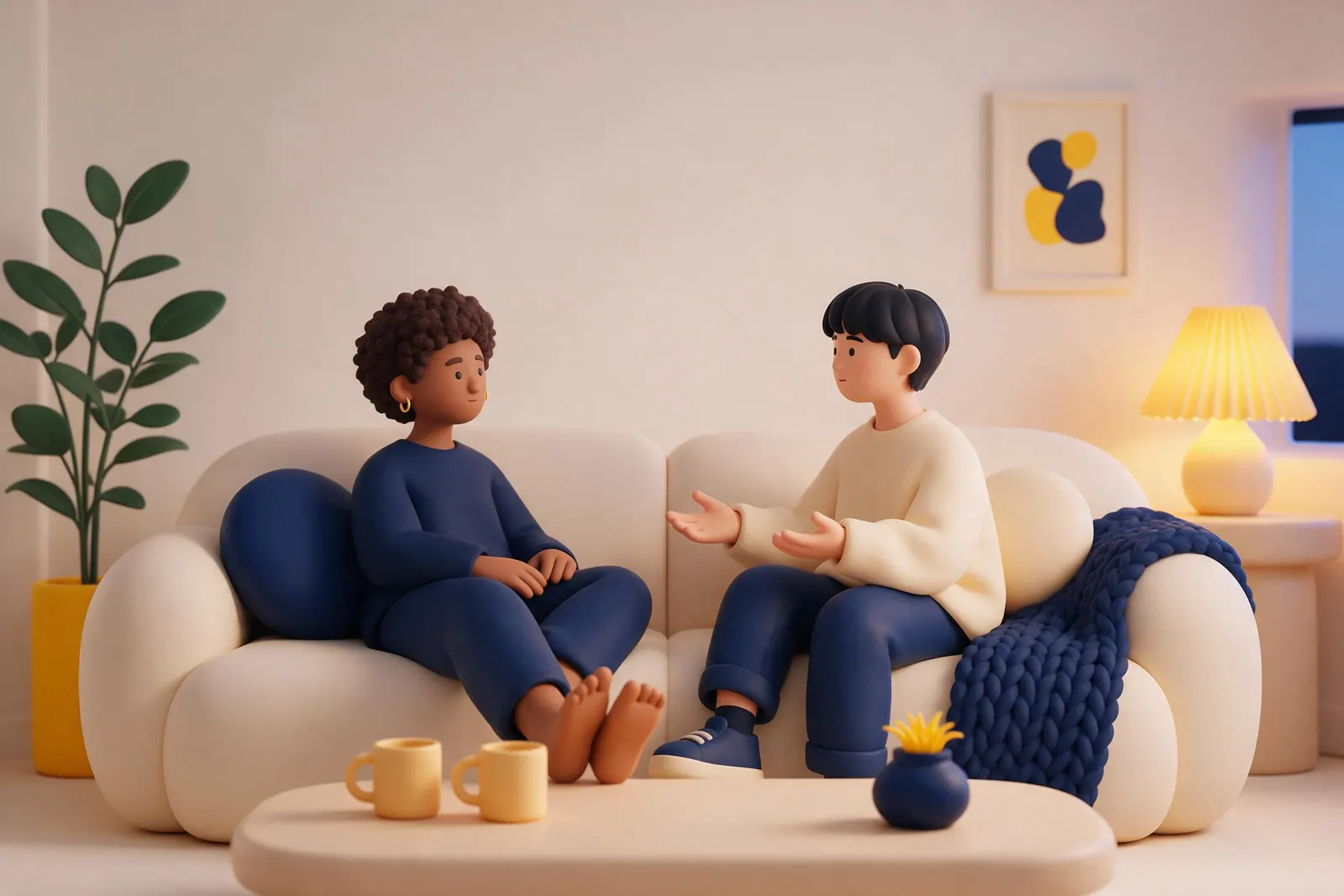 Relationships
Needs, comfort, fights, a partner who’s gone quiet, apologies, big decisions.
How to communicate better with your partner →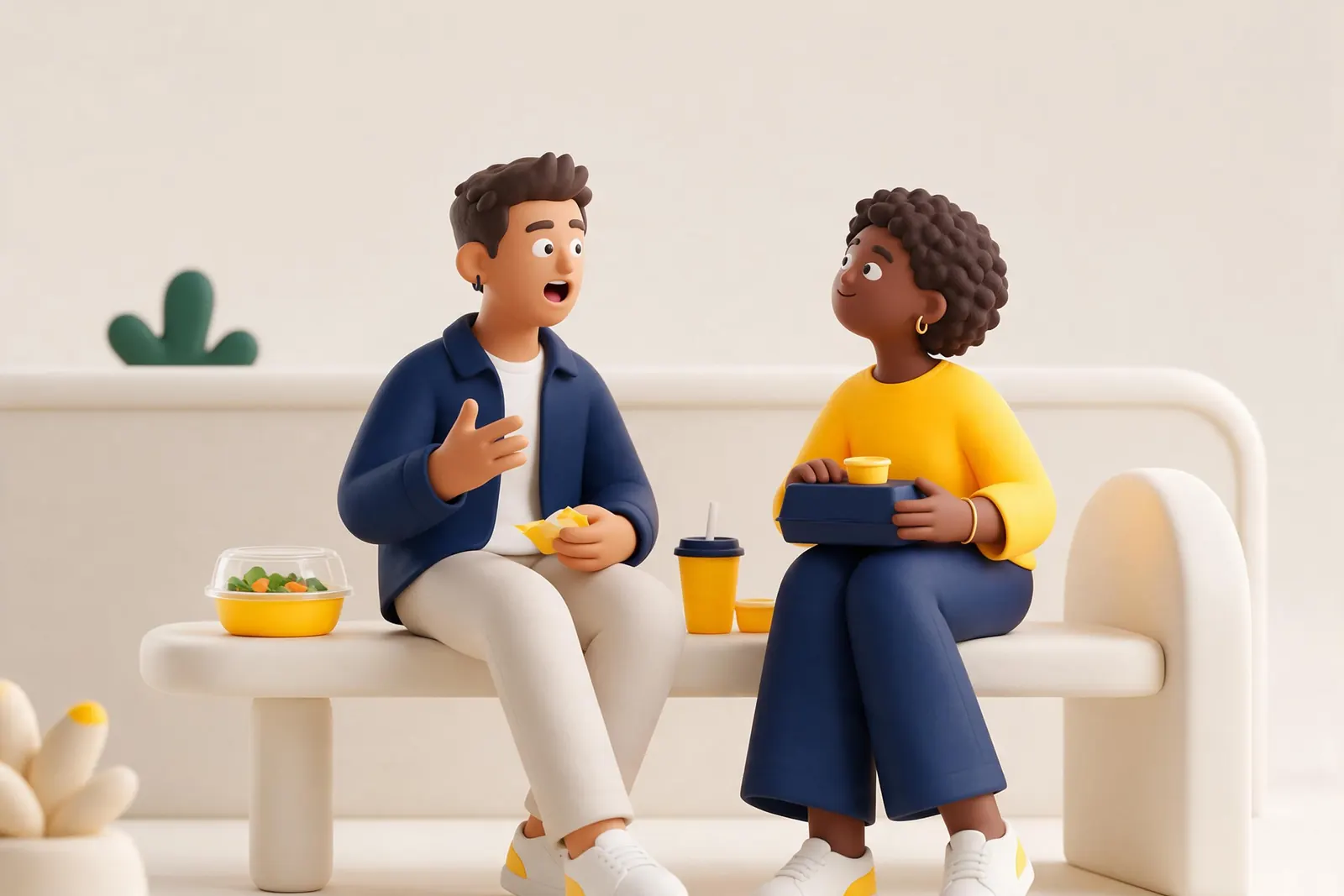 Friends
 Work & Career
Meetings, feedback, being overlooked, asking for a raise, networking.
Communication in the workplace → Messages & Online
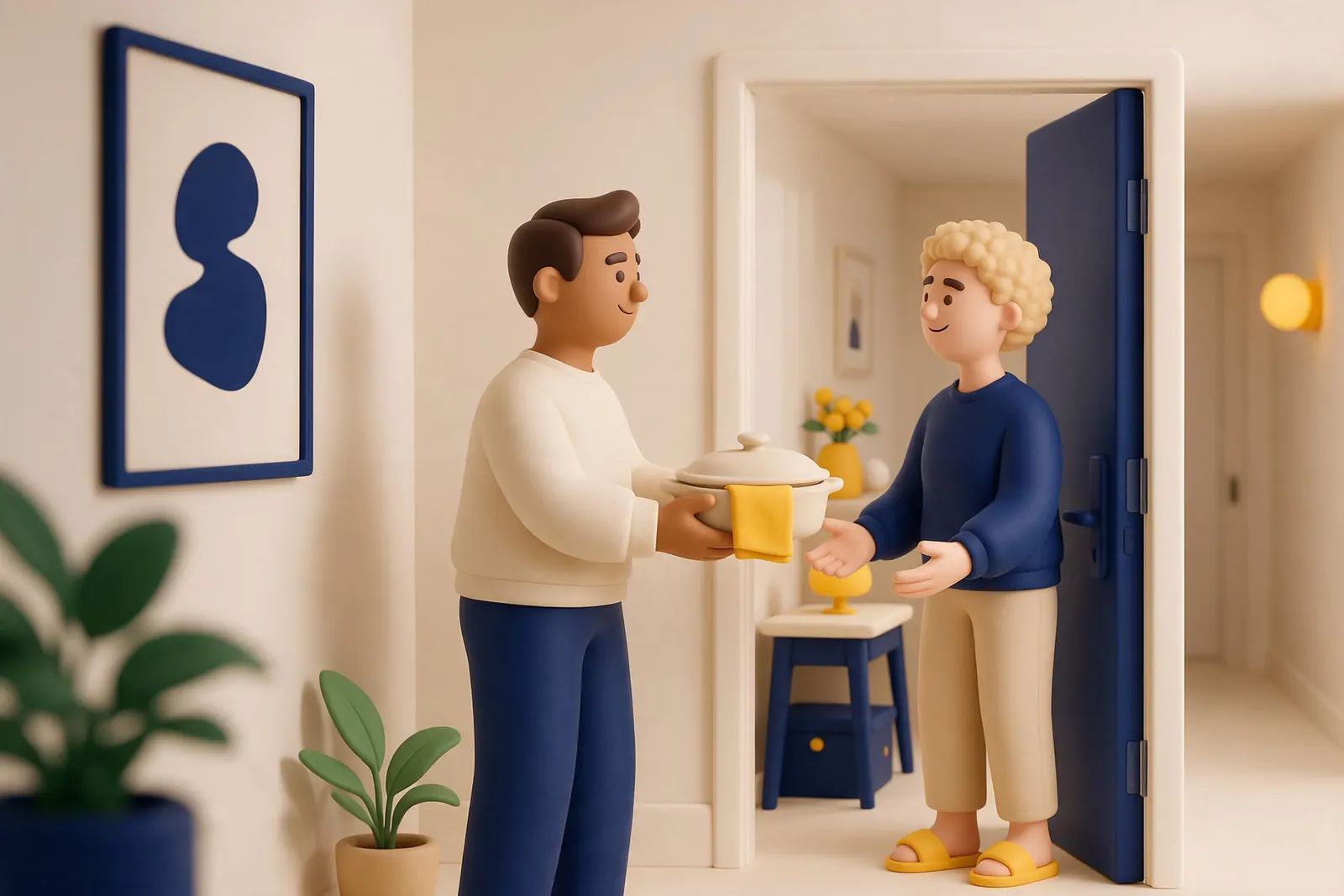 Everyday Life
New moments added all the time — and you can send in one of your own.
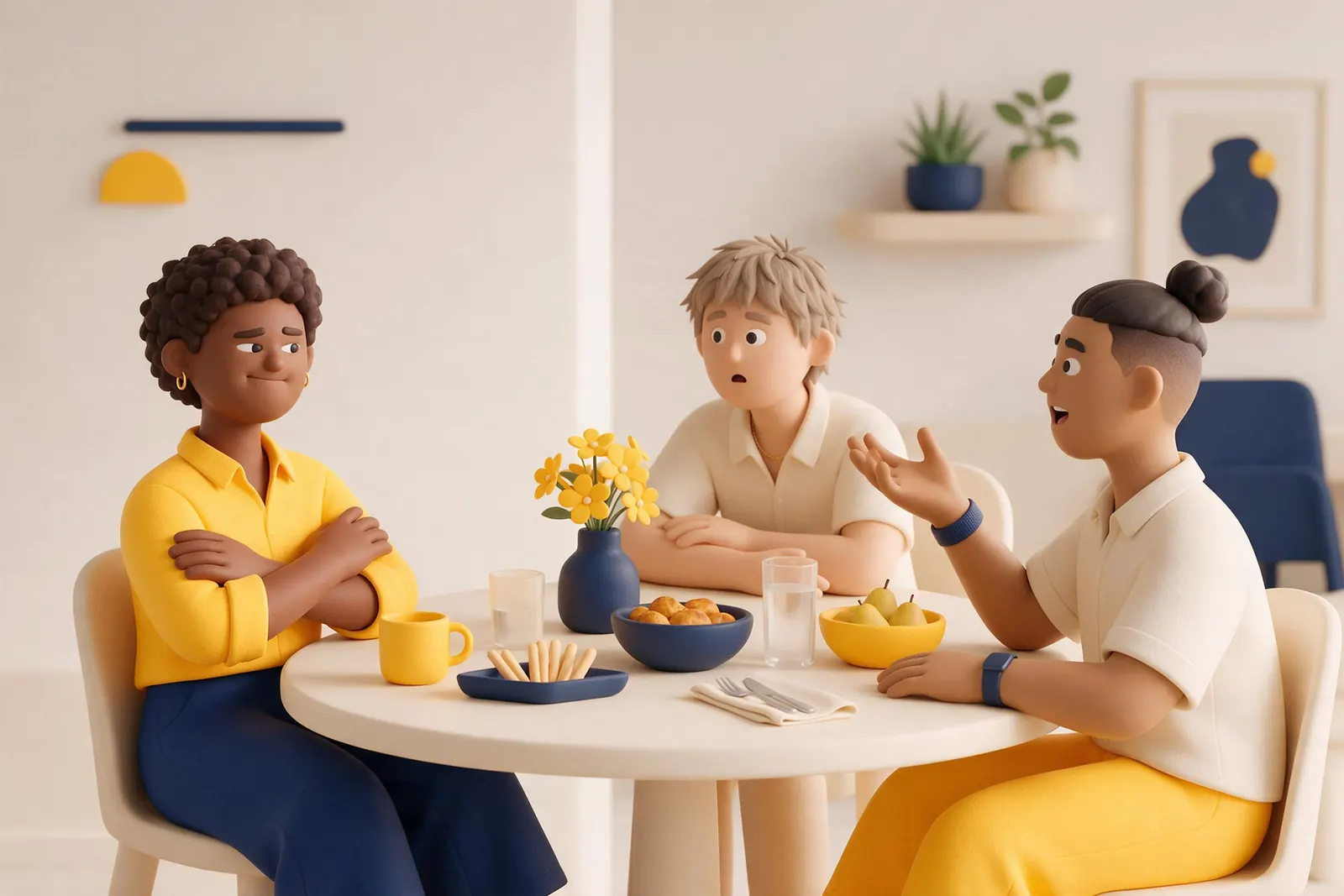 Reading People
 Conversation Skills
 Speaking Up
 Social Confidence
Free to start. Worth keeping.
- ✓ The first 3 moments in every scene and skill
- ✓ 5 AI coach replies a day
- ✓ Everything in Warm-up, plus:
- ✓ Every moment in all 11 scenes and skills
- ✓ Every new moment we add
- ✓ AI coach on every round — up to 100 a day
- ✓ Everything in Warm-up, plus:
- ✓ Every moment in all 11 scenes and skills
- ✓ Every new moment we add
- ✓ AI coach on every round — up to 100 a day
- ✓ Save ~50% — about $90 a year vs monthly

The best way to communicate better.
Practice the exact moment. Free to start, no card needed.