How to Respond to an Apology When “It’s Okay” Isn’t True
Here’s how to respond to an apology: thank them for saying it, be honest about where you are, and — if you’re ready — tell them what happens next.
A reliable friend — someone who never flakes — bails on your plans two hours out. The message that comes through is heavy with genuine regret. Your instinct is to reassure them hard.
Free · No sign-up · About a minute
Practice real conversations until you communicate better
Communicate Better is where you practice real conversations. Step into the moment, say it your way, and see how they react — then get coached on a better line.
- Type what you’d say
- See where they’re coming from
- See how it lands — and a better line
How to accept an apology in 4 steps
Rushing to say “it’s fine” when it isn’t erases what happened. Here’s how to respond to an apology in a way that’s kind to the person and honest about the thing.
Thank them for saying it
The first step in how to respond to an apology is giving credit. Apologizing is uncomfortable, and a real apology deserves it: “Thank you for saying that,” or “I appreciate you coming to me.” You’re not saying everything is fine — you’re recognizing that they did the hard part.
Be honest instead of saying “it’s okay”
You can accept an apology without saying it’s okay. Try “I appreciate it,” “That helps,” or “I’m still a little hurt, but I hear you.” If it genuinely was a small thing, “No worries” is fine. The goal is simply that your words match how you feel, the same rule for how to respond to anything heartfelt.
Check whether it’s a real apology
Knowing how to respond to an apology starts with knowing whether you got one. If you know how to apologize well, you’ll recognize it: a real apology names what they did and doesn’t shift the blame. “I’m sorry I missed your graduation” is one. “I’m sorry you feel that way” isn’t — it apologizes for your feelings, not their actions. You can gently point that out instead of accepting something that wasn’t offered.
Say what happens next
Close with a step forward, if you’re ready: rescheduling plans, agreeing on how handoffs will work, or saying you need a few days. If you’re not ready to move on, say that too: “I need a little time, but I’m glad you said something.” That’s still a kind response.
How to reply to an apology: mistakes to skip
- “It’s totally fine!” when it isn’t. You’ll carry the resentment, and they’ll never know.
- Using the apology to relitigate every past mistake at once.
- Accepting a non-apology like “sorry if you were offended” as if it were the real thing.
- Demanding a perfect apology from someone who’s clearly nervous and trying.
How to respond to I’m sorry: examples
Here’s how to respond to “I’m sorry” in the moments that come up most — including the apology text and the apology you don’t quite believe.
| The moment | Say this | Avoid this |
|---|---|---|
| A friend cancels, and is genuinely sorry | “Thank you for saying that. Let’s just pick a new day.” | “Whatever, it’s fine.” (when it clearly isn’t) |
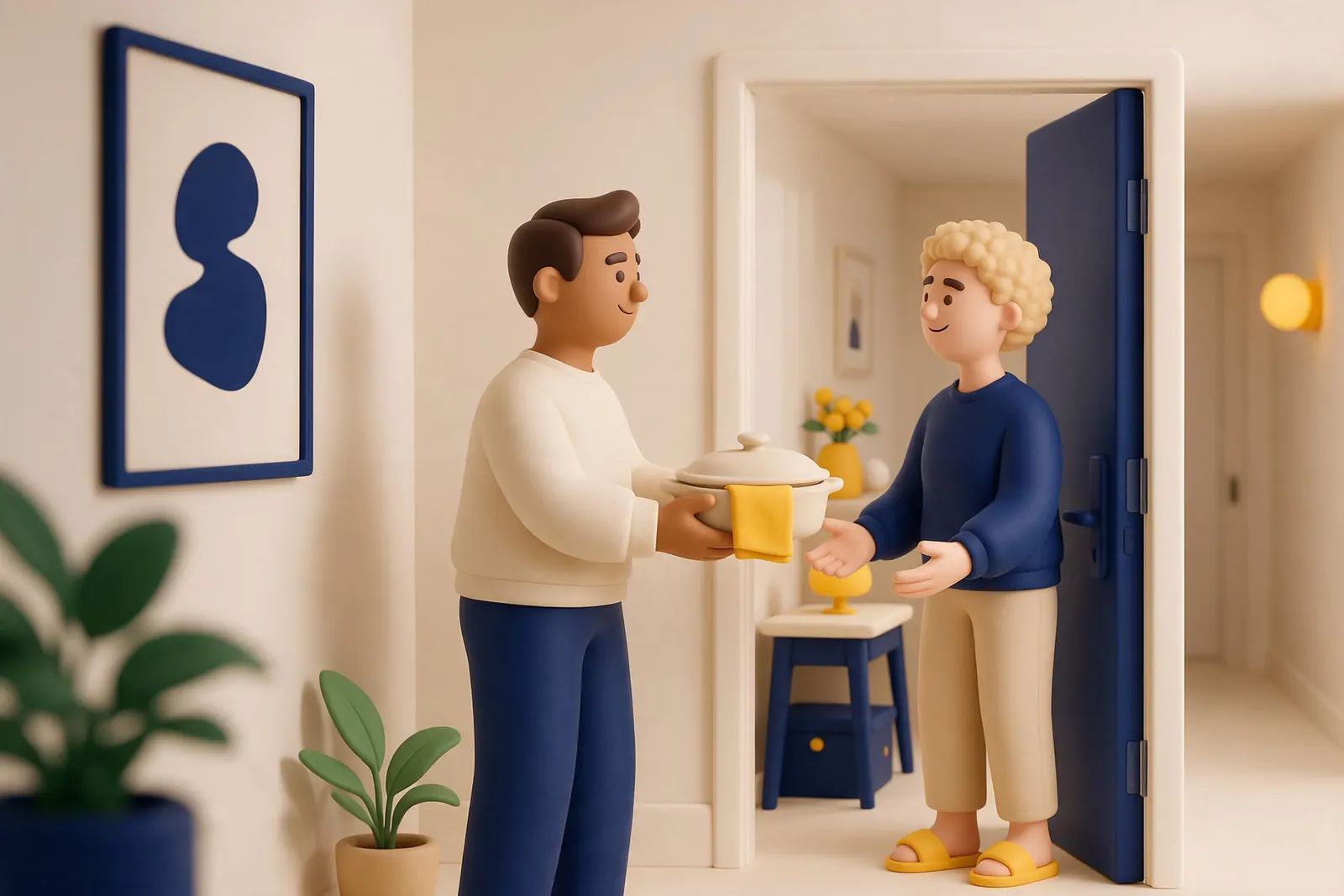
| A nervous, clumsy apology at your door | “Thank you for coming over. That took guts. Come in.” | Critiquing how they said it |
| “I said I’m sorry. can we just drop it?” | “Yep, dropped. Thanks for saying sorry — I appreciate it.” | Demanding a better apology |
| Your brother missed your graduation | “I’m glad you said it. It really hurt, and I need a little time.” | “Don’t worry about it.” |
| A teammate dropped the ball | “Thanks for owning it. Let’s build a checklist so it’s easy next time.” | Cc’ing your manager on the reply |
| An apology for something small | “Oh, no worries at all.” | Making a big speech about forgiveness |
How to respond to an apology text
An apology text gives you time, so use a little of it. Reply once you know what you want to say, even if that’s “Thanks for this. I need a day to think.” If they apologized for something big, offer to talk in person or by phone — hard conversations rarely resolve over text. And if you’re replying to an apology professionally, keep it short and forward-looking: “Thanks for letting me know. Let’s make sure it’s sorted by Friday.”
How to respond to an apology: FAQ
How do you accept an apology without saying it’s okay?
Say “Thank you for apologizing,” “I appreciate that,” or “I accept your apology.” These accept the person’s effort without claiming the thing didn’t matter. You can add “I’m still a bit hurt” if that’s true.
How do you respond to an apology when you’re still hurt?
Be kind and honest at the same time: “Thank you for saying that. I’m still upset, and I need a little time.” You can accept an apology and still need space. Forgiveness doesn’t have to happen on their schedule.
How do you respond to an apology professionally?
At work, how to respond to an apology is simple. Keep it brief, gracious, and focused on next steps: “Thanks for flagging it. Let’s get the revised numbers by Thursday.” The most useful response to an apology at work is one that fixes the process, not one that dwells on the mistake.
What should I say instead of “it’s okay” when someone apologizes?
Try “Thank you,” “I appreciate you saying that,” “That means a lot,” or “I forgive you” if you do. These are warm and honest, and they don’t accidentally tell the person the behavior was fine.
How do you respond to “sorry to hear that”?
A simple “Thanks, I appreciate it” is enough. If it’s a friend and you want to say more, add a line: “Thanks — it’s been a rough week.” You don’t owe anyone a longer explanation.
How to respond to an apology honestly isn’t learned from a list. It’s built by practice.
Communicate Better is built for one thing: helping you communicate better. Step into real moments, say it your way, and see how it lands — until the right words come without thinking.
Learn more about Communicate Better →Type what you’d say
Step into a real moment and reply in your own words, the way you’d actually say it. No multiple choice, no script.
See where they’re coming from
Then call what’s going on for them, what they mean and how they feel, and find out right away whether you read them right.
See how it lands — and a better line
An AI plays the other person and reacts to what you actually wrote. Then a coach shows you a better line and why it works. The moments you miss come back until you’ve got them.
7 scenes and 4 core skills — practice them all
1,100+ real moments to practice, from your first hello to the hardest talk.
 New People
Openers, small talk, reading if they want to keep going, making new friends.
How to start a conversation → Dating
 Relationships
Needs, comfort, fights, a partner who’s gone quiet, apologies, big decisions.
How to communicate better with your partner → Friends
 Work & Career
Meetings, feedback, being overlooked, asking for a raise, networking.
Communication in the workplace → Messages & Online
 Everyday Life
New moments added all the time — and you can send in one of your own.
 Reading People
 Conversation Skills
 Speaking Up
 Social Confidence
Free to start. Worth keeping.
- ✓ The first 3 moments in every scene and skill
- ✓ 5 AI coach replies a day
- ✓ Everything in Warm-up, plus:
- ✓ Every moment in all 11 scenes and skills
- ✓ Every new moment we add
- ✓ AI coach on every round — up to 100 a day
- ✓ Everything in Warm-up, plus:
- ✓ Every moment in all 11 scenes and skills
- ✓ Every new moment we add
- ✓ AI coach on every round — up to 100 a day
- ✓ Save ~50% — about $90 a year vs monthly

The best way to communicate better.
Practice the exact moment. Free to start, no card needed.