Banter Meaning: What Banter Is, Examples, and How to Banter Back
Here’s the banter meaning in plain words: what it is, how to tell it from a real dig, and how to banter back with a smile.
Playful, back-and-forth teasing between people who feel at ease with each other. It sounds like a jab, but it means “I like you — play with me.”
- “Fifteen minutes late to your own birthday. Truly iconic.”
- “Is that a water bottle or a fire extinguisher?”
You're 15 minutes late to your own birthday dinner. Everyone's already seated. As you walk up to the table, your best friend Carlos stands up.
Free · No sign-up · About a minute
Practice real conversations until you communicate better
Communicate Better is where you practice real conversations. Step into the moment, say it your way, and see how they react — then get coached on a better line.
- Type what you’d say
- See where they’re coming from
- See how it lands — and a better line
What is banter? The meaning in 4 signs
The banter meaning is simple: it’s teasing that says “I like you,” and missing it can make you seem stiff. Here are four signs it’s banter, and how to answer it.
Banter comes with a smile
Real banter has a tell: the grin, the raised eyebrow, the emoji, the exaggerated tone. “Should I call Channel 5? This is a historic day for the block,” from a neighbor with a big smile, is banter. The same words, said flat and cold, are a complaint. Most of the banter meaning lives in the face, so read the face — the social cues — before you read the words.
Banter aims at small things
Good banter pokes at harmless stuff — your playlist, your giant water bottle, your team losing on Sunday. Playful banter stays away from things people can’t change or are hurting about: money, looks, a breakup, a layoff. If a joke lands on a real wound, it stopped being banter.
Banter is an invitation, not a verdict
That is the heart of the banter meaning: when someone banters with you, they’re not waiting for a defense. They want you to play. “Is a hot dog a sandwich? Choose wisely” is a door into the group. Answering banter seriously (“Well, technically…”) closes the door. Answering with a light, confident twist keeps the banter going.
Good banter goes both ways
Banter back and forth is the whole point: they tease, you tease back, and both of you end up closer. If only one person ever gets teased, or one person keeps laughing while the other has stopped, it isn’t banter anymore. It’s someone being picked on.
How to banter: mistakes to skip
- Getting defensive. Explaining why your cocktail order makes sense kills the banter in one sentence.
- Going harder than they did. Witty banter matches the other person’s energy; it doesn’t try to win.
- Bantering with someone you don’t know yet about something personal. Keep early banter on neutral ground.
- Laughing along when it hurts. You can end the banter with a smile — “Okay, retire that one” — and nobody loses face.
Banter examples: playful banter and how to answer it
Here are banter examples from real moments — work, friends, dating, even meeting the parents — with the banter meaning behind each jab, a good way to banter back, and what to avoid.
| The moment | Say this | Avoid this |
|---|---|---|
| A coworker rubs in your team’s loss | “Appreciate it. Send the flowers to Dallas, though — they’ll need them in January.” | “Whatever, refs blew it.” |
| A new teammate jokes about your huge water bottle | “It’s my emotional support bottle. It believes in me.” | “It’s actually for hydration goals…” |
| Your carpool buddy is sick of your music | “Learning the words is mandatory. …Fine, you get the aux home.” | Turning it off without a word, a little hurt |
| A new group chat tags you in a silly debate | “A hot dog is a taco. I will not be elaborating.” | “Haha I don’t know, whatever you guys think!” |
| A client jokes about your cat on Zoom | “She’s head of quality control. Shall we dive in?” | Apologizing three times and shooing the cat |
| Your partner’s dad spots your rival team’s cap | “I was hoping to make a good impression first. The hat can wait in the car.” | Defending your team’s record |
| A friend teases your one good shot | “The other nine were strategy. You’re doomed now.” | “I’m just warming up, okay?” |
| A bartender ribs your fussy order | “I’m stress-testing the full skill set. Consider it a compliment.” | “Sorry, I can just get a beer.” |
Banter or bullying?
Friendly banter and mean teasing can use the same words. The banter meaning comes from how it feels to both people. Banter leaves everyone laughing and a little closer. Teasing that keeps hitting the same sore spot, only runs one way, or continues after you’ve stopped smiling is not banter, even if the other person calls it that — it’s closer to passive aggressive humor. You don’t need a lecture to stop it. One light line — “Okay, that joke’s retired” — ends it, and a real friend will take the hint.
Banter meaning: FAQ
What does banter mean?
Banter means playful, teasing conversation between people who are comfortable with each other. The banter meaning is less about the words and more about the tone: a jab said with a grin is really a way of saying “I like you, play with me.” Banter is a sign of warmth, not hostility.
What is witty banter?
Witty banter is banter with quick, clever comebacks — each person tops the last line with something a little funnier. The witty banter meaning isn’t about being the funniest person in the room, though. It’s about keeping the rhythm going so both people feel sharp and liked.
What is playful banter with a guy?
Playful banter with a guy usually sounds like light challenges: he questions your taste in movies, jokes that you’re competitive, or pretends to be offended by your order. It’s often flirting. Playful banter examples that work: “Concerns noted and overruled,” or “Bold of you to judge before I’ve seen your list.” Tease back, then ask him something real.
How do you banter back and forth?
To banter back, accept the tease instead of defending yourself, then add a light twist: exaggerate it, turn it back on them, or play along with the joke. Keep it short, match their energy, and stay on harmless topics. If you don’t have a comeback, a laugh and “You got me” is still good banter.
What is friendly banter at work?
Friendly banter at work is light teasing about safe topics — sports teams, coffee orders, the office thermostat — between people who get along. Keep workplace banter away from looks, pay and personal life, and be extra careful teasing anyone junior to you, since they may not feel free to tease back.
When does banter go too far?
Banter goes too far when it hits something the other person is hurting about, repeats after they’ve stopped laughing, or only ever goes one direction. If you’re on the receiving end, close it with a smile: “Alright, I’ve been roasted enough for one day.”
Is the banter meaning different in British English?
The core banter meaning is the same: playful teasing between people who like each other. In British English the word is used more loosely, and “it’s just banter” is sometimes said to excuse a joke that went too far. Judge it by the same signs — a smile, a harmless target, and teasing that goes both ways.
Good banter isn’t a gift. It’s a rhythm you get by practicing.
Communicate Better is built for one thing: helping you communicate better. Step into real moments, say it your way, and see how it lands — until the right words come without thinking.
Learn more about Communicate Better →Type what you’d say
Step into a real moment and reply in your own words, the way you’d actually say it. No multiple choice, no script.
See where they’re coming from
Then call what’s going on for them, what they mean and how they feel, and find out right away whether you read them right.
See how it lands — and a better line
An AI plays the other person and reacts to what you actually wrote. Then a coach shows you a better line and why it works. The moments you miss come back until you’ve got them.
7 scenes and 4 core skills — practice them all
1,100+ real moments to practice, from your first hello to the hardest talk.
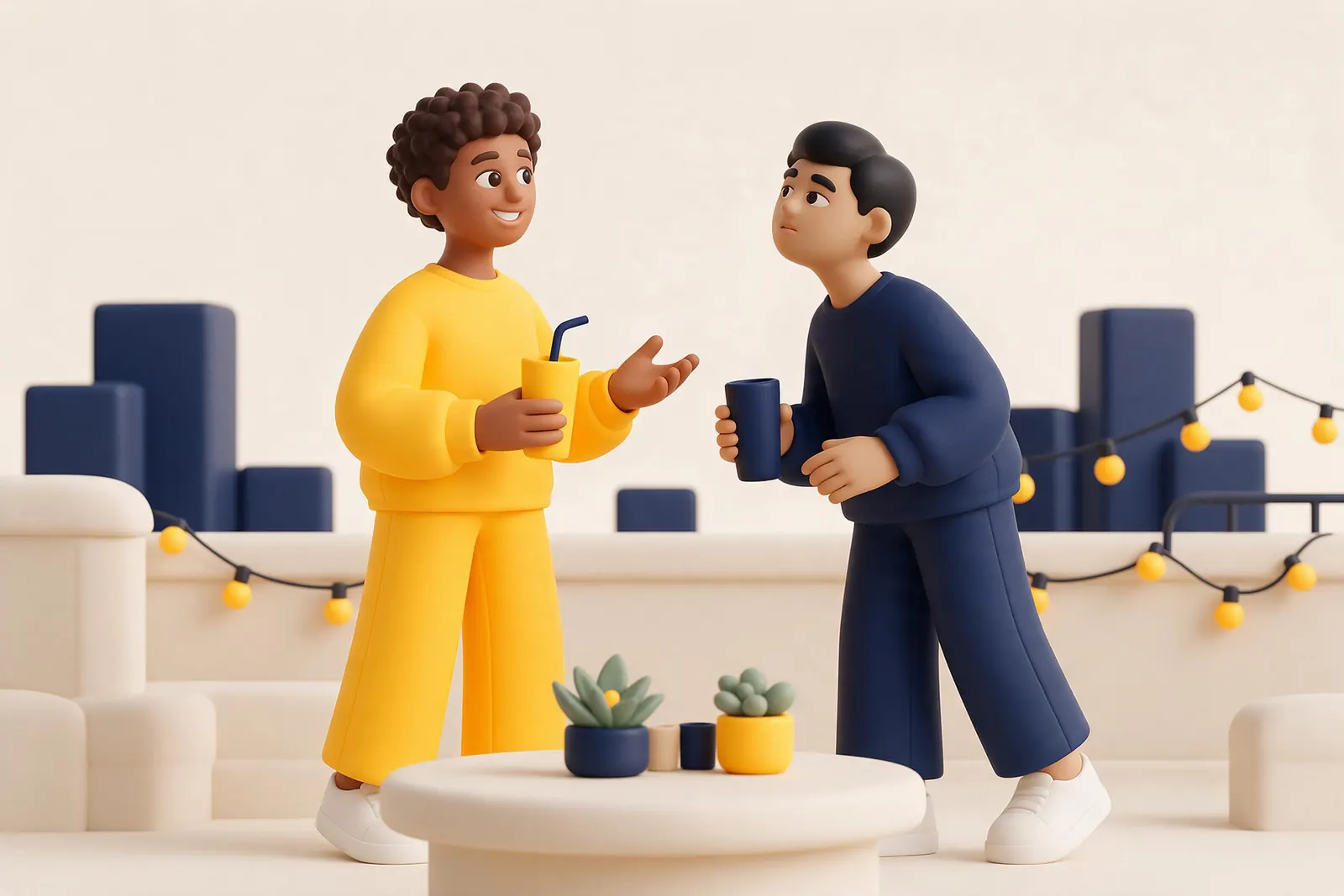 New People
Openers, small talk, reading if they want to keep going, making new friends.
How to start a conversation → Dating
 Relationships
Needs, comfort, fights, a partner who’s gone quiet, apologies, big decisions.
How to communicate better with your partner → Friends
 Work & Career
Meetings, feedback, being overlooked, asking for a raise, networking.
Communication in the workplace → Messages & Online
 Everyday Life
New moments added all the time — and you can send in one of your own.
 Reading People
 Conversation Skills
 Speaking Up
 Social Confidence
Free to start. Worth keeping.
- ✓ The first 3 moments in every scene and skill
- ✓ 5 AI coach replies a day
- ✓ Everything in Warm-up, plus:
- ✓ Every moment in all 11 scenes and skills
- ✓ Every new moment we add
- ✓ AI coach on every round — up to 100 a day
- ✓ Everything in Warm-up, plus:
- ✓ Every moment in all 11 scenes and skills
- ✓ Every new moment we add
- ✓ AI coach on every round — up to 100 a day
- ✓ Save ~50% — about $90 a year vs monthly
The best way to communicate better.
Practice the exact moment. Free to start, no card needed.